

GS
Goldman Sachs Group Inc
The Evil Sh*t Goldman has done over the years
As I was continuing my research on Goldman, I was genuinely surprised by the number of controversies the bank has had since the 2000s (it's even worse before than, but I just want to focus on relatively recent scandal).
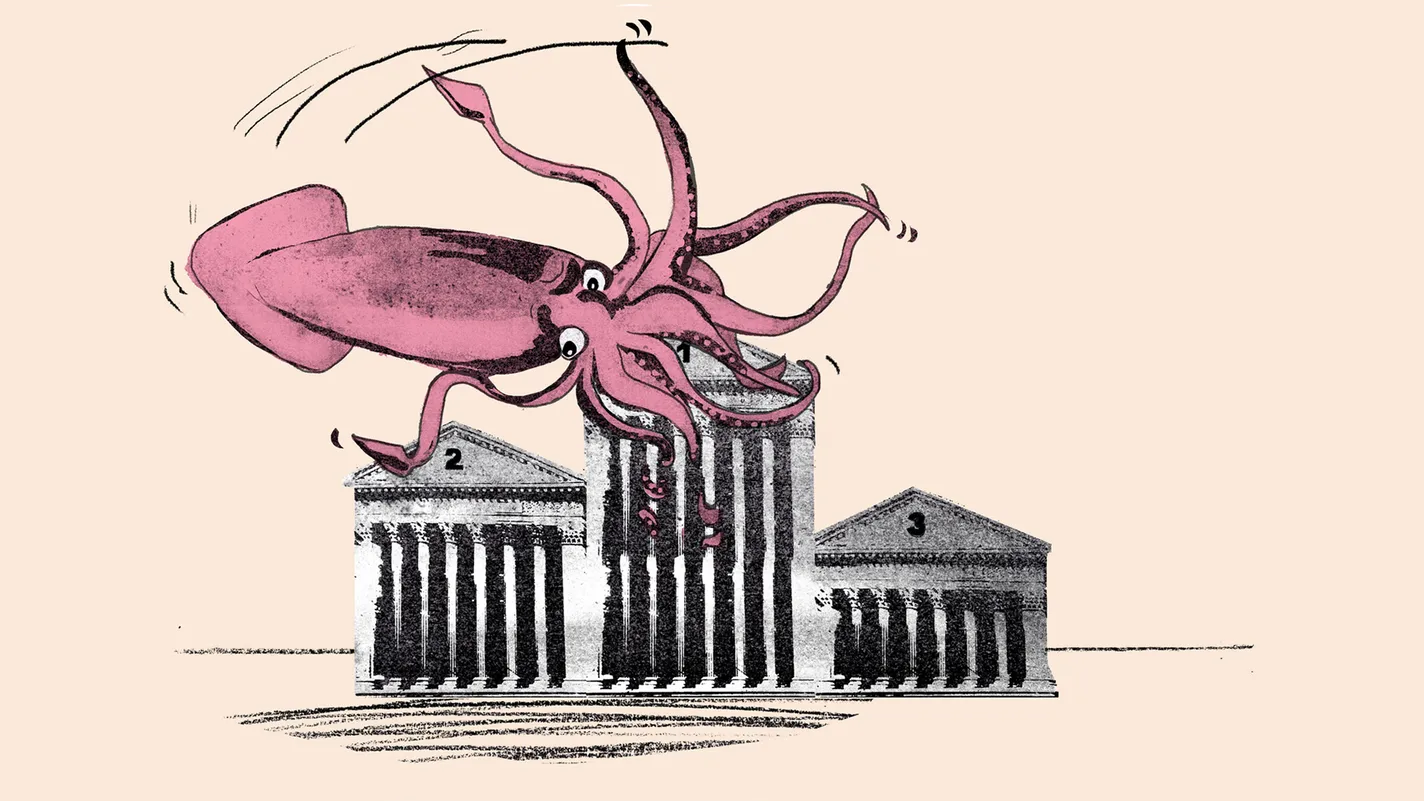
Let's take a look...
## Dot Com Boom
During the late-1990s tech dot-com boom, Goldman Sachs was heavily involved in taking internet startups public – often with questionable practices. Investigations later revealed that Goldman deliberately underpriced many IPOs during the bubble to benefit favored clients, who would flip the shares for quick profits and then kick back some of those gains to the bank.
This “laddering” scheme defrauded the companies going public (which raised less money than they could have) and the early investors who bought at inflated post-IPO prices. Goldman (like other banks) also faced sanctions for conflicts of interest in its research division – for example, issuing overly bullish analyst reports on companies it took public. In 2003, Goldman paid a settlement over allegations of misleading stock research during this period.
Overall, Goldman earned huge fees underwriting dot-com stocks that largely imploded afterward – a study noted that out of ~60 internet IPOs Goldman led from 1996 through 2000, the vast majority performed so poorly that an equal investment in each would have lost money by 2000 . These practices contributed to the dot-com bust, harming retail investors who were left holding crashing stocks once the hype faded.
## Role in the 2008 Financial Crisis
Goldman Sachs played a controversial role in the subprime mortgage bubble and the 2008 financial crisis. The firm helped package and sell complex mortgage-backed securities (MBS) and collateralized debt obligations (CDOs) to investors, even as it privately bet against those same instruments. In fact, Goldman took large short positions (bets that the housing market would collapse) while marketing the securities as sound – behavior that a U.S. Senate investigation later described as misleading clients and profiting at their expense. One infamous case was the “Abacus” CDO deal structured for a hedge fund client betting on failure; when the housing market crashed, Goldman profited while the investors it sold to were left with huge losses. Goldman ultimately paid a $550 million settlement in 2010 to resolve SEC fraud charges related to these mortgage deals (without admitting wrongdoing) .
The aftermath of the crash saw Goldman further criticized for how it benefited from government bailouts. The firm received a $10 billion TARP rescue and, indirectly, a $12.9 billion payout via the AIG bailout, since AIG used taxpayer funds to pay 100 cents on the dollar on swaps owed to Goldman. Critics argued Goldman should have shared more pain instead of being made whole with public money. Goldman’s rapid return to profitability – and its decision to pay out record bonuses in 2009 totaling $11.4 billion – drew public outrage given that taxpayers and the broader economy were still suffering . The optics of Goldman alumni in influential roles (for example, former CEO Hank Paulson was U.S. Treasury Secretary during the crisis) fueled perceptions of favoritism. Although Goldman denies it got special treatment, its swift rebound and “Government Sachs” connections (a revolving door with regulators) reinforced the view that the bank’s ruthless risk-taking was shielded by its political influence.
Source: https://en.wikipedia.org/wiki/SEC_v._Goldman_Sachs_ABACUS
## Commodity Price Speculation and Market Manipulation Allegations
Goldman Sachs has been accused of profiting from commodity market speculation that harmed average consumers globally. Critics argue that Goldman helped inflate bubbles in essentials like food and fuel in the mid-2000s. For instance, Goldman pioneered commodity index funds that poured billions of investor dollars into food staples (via the Goldman Sachs Commodity Index). This wave of speculative money drove up prices for wheat, corn, rice, and other staples in 2007–2008, contributing to a global food price crisis. A British nonprofit even charged that Goldman’s traders helped “spearhead” the frenzy that sent grain prices soaring and pushed 200 million people toward hunger and malnutrition. (Goldman called these accusations “misleading,” but the episode underscored how financial bets can have real human costs.)
Likewise, Goldman and other banks took massive positions in oil futures in the lead-up to the 2008 oil price spike. By mid-2008, oil peaked around $147/barrel, and confidential data later showed big Wall Street firms (which neither produce nor consume oil) held huge bets just beforehand. Observers noted that banks with “deep pockets” could sway prices by their sheer trading weight, “artificially raising” the cost of crude beyond supply-and-demand fundamentals. Notably, Goldman’s own analysts warned in 2011 that excessive speculation had added about $20 per barrel to oil prices – effectively a speculative premium that hit consumers at the pump. Yet Goldman simultaneously lobbied against stricter commodity position limits that might curb such speculation. This behavior suggested a willingness to talk about market risks in public while profiting from them behind the scenes.
Goldman was also involved in more direct market manipulation scandals. In the early 2010s, it purchased a network of metal warehouses (Metro International) and was accused of exploiting arcane rules to inflate aluminum prices. After Goldman’s acquisition, the wait times to get aluminum out of its Detroit warehouses mysteriously stretched from 6 weeks to over 16 months. By shuffling tons of metal between warehouses instead of to buyers, Goldman allegedly created artificial scarcity – the premium on spot aluminum doubled, and U.S. consumers paid an estimated $5 billion extra for goods (like soda cans) as a result. Goldman denied wrongdoing, and while an initial lawsuit was dismissed, appeals kept the case alive until a settlement in 2022 .
Separately, Goldman settled a case in 2015 involving naked short selling: it paid $20 million to Overstock.com after emails showed Goldman’s traders were creating fictitious borrowable shares “out of thin air” to short sell, in what the plaintiffs called “organized counterfeiting” of stock shares. These incidents reinforce Goldman’s “vampire squid” image – a term coined by journalist Matt Taibbi – as a firm willing to “jam its blood funnel” into any market to make money, even if it distorts prices or harms others.
## Government Bailouts and Sovereign Debt Crises
Goldman’s close ties to governments and its actions during sovereign crises have also been labeled unethical. During the European debt crisis, Goldman was criticized for its role in helping Greece mask its debt. In 2001, Goldman arranged a secret $2.8 billion off-the-books loan to Greece (disguised as a currency swap) that allowed Greece to meet EU deficit targets – at least temporarily . Goldman earned an enormous €600 million fee for this deal. However, hiding this debt contributed to Greece’s financial woes down the line: when the subterfuge came to light in 2010, it undermined market confidence. Goldman and others even created a special credit default swap index on Greek debt in 2009, which fueled speculation on a Greek default. Greek bond yields spiked, pushing the country toward a severe crisis and international bailout in 2010 . Critics noted that Goldman profited from both ends – earning fees to hide debt, then potentially profiting from bets against that debt – while Greek citizens suffered through austerity and economic depression. The fact that several key European decision-makers at the time were ex-Goldman alumni (such as the European Central Bank president Mario Draghi, who had been a Goldman managing director) only heightened suspicions of undue influence.
In the United States, Goldman’s influence and “too-big-to-fail” status have been contentious. The firm’s well-placed alumni (e.g. former CEOs serving as U.S. Treasury Secretaries under both Republican and Democratic administrations) and its presence at pivotal meetings (like the 2008 New York Fed gatherings on AIG) led to accusations that it received preferential bailout treatment . While direct evidence of favoritism is debatable, there’s no doubt Goldman benefited massively from government actions during crises – from the Federal Reserve’s emergency lending facilities to the full payout of AIG insurance contracts . These outcomes shielded Goldman’s own capital and allowed it to emerge from the 2008 meltdown relatively unscathed, which rivals and the public found galling. The perception that Goldman “gamed the system” with government help – privatizing gains and socializing losses – remains a major stain on its reputation for many observers.
## Bribery and Corruption Cases in the 2010s
Goldman’s pursuit of profit has at times led it into outright corrupt deals, resulting in large scandals in recent years. A prime example is the 1MDB scandal – a multibillion-dollar corruption scheme involving Malaysia’s sovereign wealth fund (1MDB) between 2009 and 2014. Goldman arranged $6.5 billion in bonds for 1MDB and earned an unusually high $600 million in fees for three bond issues. It later emerged that around $4.5 billion from 1MDB was siphoned by corrupt officials and businesspeople in a global web of fraud and money laundering. Funds raised with Goldman’s help were diverted to luxury real estate, yachts, and even Hollywood movies (e.g. financing The Wolf of Wall Street) instead of development projects. U.S. prosecutors charged that Goldman bankers enabled bribes to Malaysian and Emirati officials to secure the deals.
In 2020, Goldman Sachs admitted wrongdoing: its Malaysian subsidiary pleaded guilty to a corruption charge, and the parent company entered a deferred prosecution agreement with the U.S. Department of Justice. Goldman agreed to pay over $2.9 billion in penalties in the U.S. (the largest ever bribery fine under the Foreign Corrupt Practices Act), and additionally paid about $3.9 billion to the Malaysian government to settle charges there . Several Goldman bankers were criminally convicted or pled guilty – for example, the Goldman partner who led the Malaysia deals admitted to conspiring to launder money and violate anti-bribery laws. The 1MDB affair was a striking example of Goldman seemingly putting profit before ethics, as the firm ignored glaring red flags about its client (financier Jho Low and Malaysian officials) in order to collect massive fees. It tarnished Goldman’s image and showed that even in the late 2010s, ethical lapses persisted within the company’s deal-making culture.
Goldman has also been criticized for profiting from deals that, while perhaps technically legal, appear morally dubious in light of human suffering. In 2017, for instance, Goldman bought $2.8 billion worth of Venezuelan government bonds (issued by state oil company PDVSA) for only $865 million – a steep discount as Venezuela’s economy spiraled. By purchasing these “hunger bonds” on the cheap, Goldman effectively provided a financial lifeline to Nicolás Maduro’s authoritarian regime, which was desperately low on cash. Venezuelan opposition leaders blasted Goldman for “making a quick buck off the suffering of the Venezuelan people” and propping up a dictatorship in exchange for profiteering on distressed debt. At the time, Venezuela was undergoing a humanitarian crisis (extreme food and medicine shortages, with millions malnourished or fleeing the country). Goldman’s willingness to transact in that situation – against the pleas of Venezuelan dissidents – drew condemnation and highlighted the bank’s reputation for putting profits over human rights. (Goldman later asserted it bought the bonds through a broker and didn’t deal directly with the government, but the criticism remained that its capital indirectly funded an oppressive regime.) This episode, along with others (such as past dealings with Libya’s sovereign fund that led to allegations of exploiting a fledgling client), shows that Goldman’s ethical line can blur when there’s money to be made.
## Recent Controversies and Current Outlook – Is Goldman “Evil” Today?
In the 2020s, Goldman Sachs has tried to rehabilitate its image and focus on more conventional banking businesses, but controversies continue to dog the firm. Notably, Goldman’s involvement in the March 2023 collapse of Silicon Valley Bank (SVB) raised fresh ethical questions. In SVB’s final days, Goldman was hired to advise the failing bank on raising capital while simultaneously buying a $21 billion portfolio of bonds from SVB for itself – a deal that crystallized a $1.8 billion loss for SVB and helped trigger the bank run.
Regulators are now investigating whether Goldman’s dual roles as SVB’s advisor and asset buyer constituted a conflict of interest or insider dealing. The Fed and SEC have subpoenaed information to see if Goldman’s bankers improperly tipped off its traders or if it took unfair advantage of SVB’s distress.
This probe is ongoing, but it underscores that Goldman’s pursuit of profit can still put it in ethically gray situations, even today. Additionally, Goldman’s foray into consumer banking (offering credit cards and loans in partnership with Apple and others) has seen compliance lapses – for example, in 2023 Goldman paid about $90 million in fines and restitution after regulators found it mishandled credit card refunds and billing disputes for customers. While relatively minor compared to past scandals, these issues show that even in new business lines, Goldman has stumbled in putting customers first.
So, is Goldman Sachs “evil” today? The answer may depend on one’s perspective, but the pattern of behavior is concerning.
Over the past two decades, Goldman has repeatedly been at the center of major financial controversies – from engineered market bubbles and crashes to profiting off global crises and corruption. The firm often pays fines or settlements (sometimes billions of dollars) after the fact, but typically without admitting wrongdoing and without top executives facing personal repercussions.
Goldman’s defenders argue that the bank has reformed since the financial crisis – it is now under stricter regulation, has divested some controversial businesses (like most commodity warehouses), and focuses on more transparent activities.
They also note that Goldman provides valuable services and liquidity to markets, and not every criticism is fair in a complex global economy. However, Goldman’s critics point out that many of the same profit-driven cultural traits persist.
The nickname “Vampire Squid” – symbolizing Goldman’s perceived greed and influence – still resonates in popular culture. Even in recent years, Goldman’s actions (like those in the SVB case or 1MDB scandal) suggest a willingness to push ethical boundaries for profit. In sum, while Goldman Sachs today may be more restrained than during the wildest days of 2008, its long history of scandals and current practices indicate that the firm continues to walk a fine line between savvy high finance and harmful, even “evil,” behavior. The ultimate judgment may lie in whether Goldman can avoid future episodes of enriching itself at the expense of customers, markets, or the public – a record that so far remains highly questionable.
## What this means for me
Buffett famously has a inbox on his desk, where he evaluates investment opportunities. It has three bins: Yes, No, and "Too Hard".
Goldman Sachs is an insanely large and complex business. I'm putting them in my "too hard" pile. I won't be taking a position, but I'm continuing my research because it's fascinating to learn more about one of the most important companies in the world.