

UBER
Uber Technologies Inc
Uber is cutting 10% of it's global workforce
Uber Technologies is cutting about 10% of its global workforce, or 3,300 positions, as part of a broader restructuring effort.
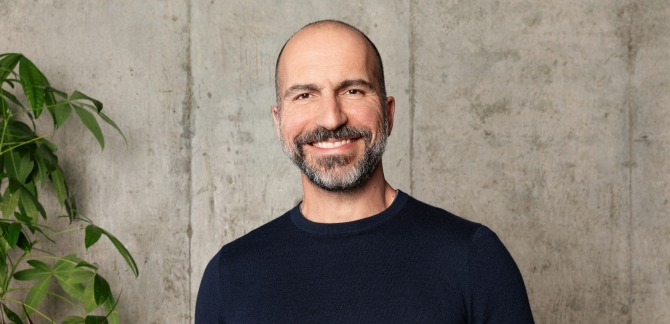
In an email on Wednesday, CEO Dara Khosrowshahi framed the decision to cut 3,300 positions as one piece of a broader strategy to consolidate fragmented teams and concentrate workers in a small number of "key hubs." Dara said this move will make Uber simpler and faster and create more capacity to invest in our future.
What's really interesting is that the cuts appear to be targeting managerial roles, including a 20% reduction in the number of "deep middle to lower management and staff roles". So, they're flattening the corporate hierarchy - I don't think that's something many people will take issue with.
The effort also includes a return-to-office mandate Uber has been pushing for this year. According to the letter, "moving forward, fewer than 1% of employees will work remotely".
Why now? Dara asked the question for you in the letter, "particularly since our business is performing so well." He's not wrong. Uber's top line has nearly tripled in five years. 2025 revenue was $52.0 billion, up 18%. Q2 earnings per share came in at $1.18, up 82% year over year. Fourth quarter free cash flow was a record $2.8 billion.
And the stock is down anyway. Uber closed at $75.24 on Sep 1, about 25% below its all-time high of $100.10 last October, on a business growing 18%...?
This is Uber's biggest restructuring since May 2020, when it cut a quarter of its staff in two rounds to survive the pandemic. That was for survival. This one is a choice, and it's the third cut this year: a hiring slowdown in May, then 10% of customer service in July, blamed on AI. This time Dara didn't mention AI once. Meanwhile, in July, Uber agreed to buy Delivery Hero at a $14.8 billion equity value. Buying a company that size and cutting 3,300 people inside sixty days tells you where the priorities are.
So, where are the savings going?
Dara says they are doing these cutes so they can invest it into the autonomous future. The letter doesn't attach a dollar figure. Uber already has: more than $10 billion committed to autonomous vehicles, roughly $2.5 billion of it equity stakes and about $7.5 billion in fleet purchases tied to milestones, across more than 30 partners.
The big ones:
Rivian: up to $1.25 billion through 2031, milestone-gated. 10,000 autonomous R2 robotaxis for San Francisco and Miami starting 2028, 25 cities by 2031, an option on 40,000 more.
Lucid and Nuro: $500 million-plus into Lucid, so Uber now owns more than 11% of the company, with a minimum order of 35,000 Gravity SUVs running Nuro's software. Commercial launch in San Francisco targeted for late this year.
Wayve ($300 million, London), Waabi ($250 million), WeRide ($100 million, Middle East), Avride (Dallas), Baidu (Dubai).
Uber sold its own self-driving unit to Aurora in 2020 and told everyone it would be the app, not the car.. which I thought was a good idea, since it's an asset-light model. Five years later it owns 11% of an automaker and has ordered 45,000 vehicles. That's not asset-light anymore.
Here's the full letter for anyone interested: https://www.uber.com/us/en/newsroom/simplerfasteruber/