

Investing Fundamentals
The Fed will probably raise rates next week. What do we do?
This morning, we got our an updated inflation print.
The Labor Department said Friday that the inflation rate held steady at 3.4% in August. That matched analyst expectations and was even with July’s 3.4%. A key measure of underlying price trends, however, came in stronger than expected.
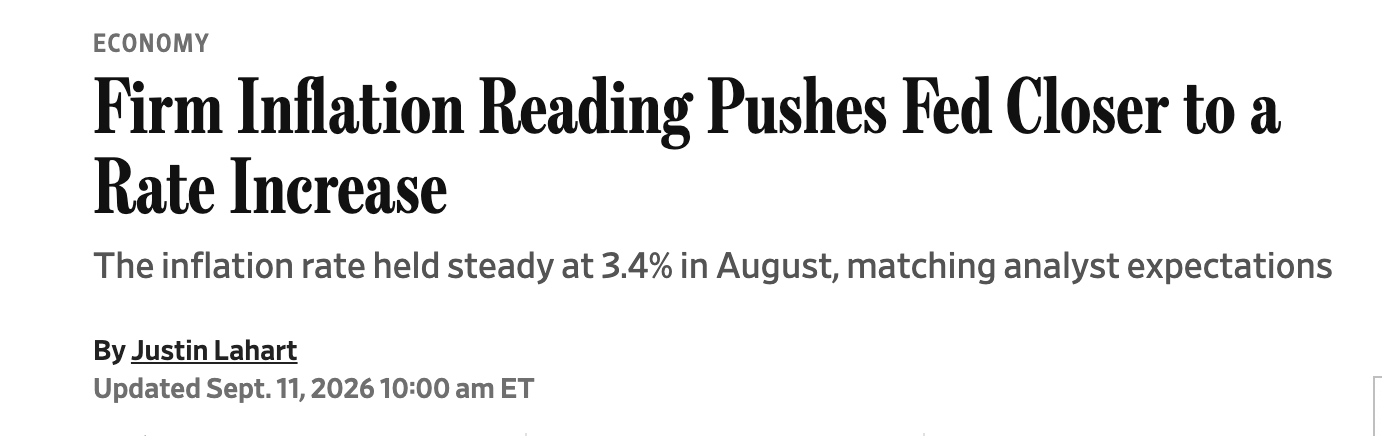
It's looking more and more like the Fed will need to increase rates next week.
Interest rate futures now imply there is about a 90% chance that the central bank will increase its target range on overnight rates by a quarter point. Prior to this report being released, the chances were about 70%.
The numbers
Prices excluding food and energy—the so-called core that economists watch to help gauge underlying price trends—were up 2.4% from a year earlier. That was in line with expectations.
Over the month, however, core prices rose 0.3%, higher than the previous month and higher than expectations. The reading broke two months of mildly encouraging data that had tentatively validated central bank forecasts that inflation would slow in the second half of the year as tariff effects faded.
Poring over the CPI numbers, many economists now think that the core version of the PCE price index rose by 0.3% last month, a pace many Fed watchers have speculated could trigger a rate hike.
Why this matters
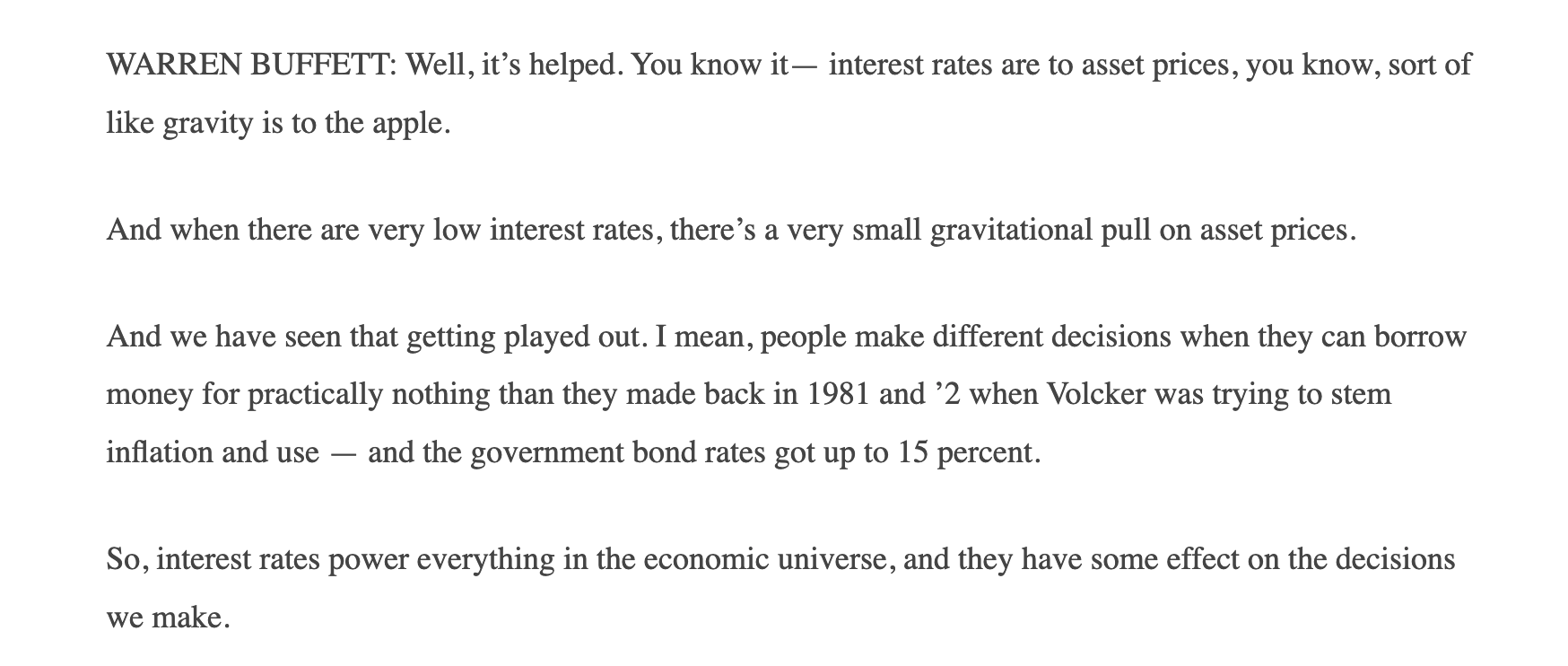
Back at the 2013 Annual Shareholder meeting, Buffett said something I've thought back on quite often. He said, "interest rates are to asset prices like gravity is to the apple".
If I had a crystal ball for investing, the one thing I'd ask it to tell me is what longterm rates will be. I'd be the best investor of all time if I had that information.
What do we do?
Unfortunately, I don't have a crystal ball. And i'd wager you do not either.
So, what do we do?
Fortunately, this is why I love studying Buffett. Buffett's answer to inflation has been the same for fifty years:
Own businesses that can raise prices. In his 2010 interview with the Financial Crisis Inquiry Commission he said "the single most important decision in evaluating a business is pricing power," and that if you have to hold a prayer session before raising prices 10%, you've got a terrible business.
To go further on what the Oracle recommended, he wrote the checklist in the 1981 letter, the last time inflation was a real problem.
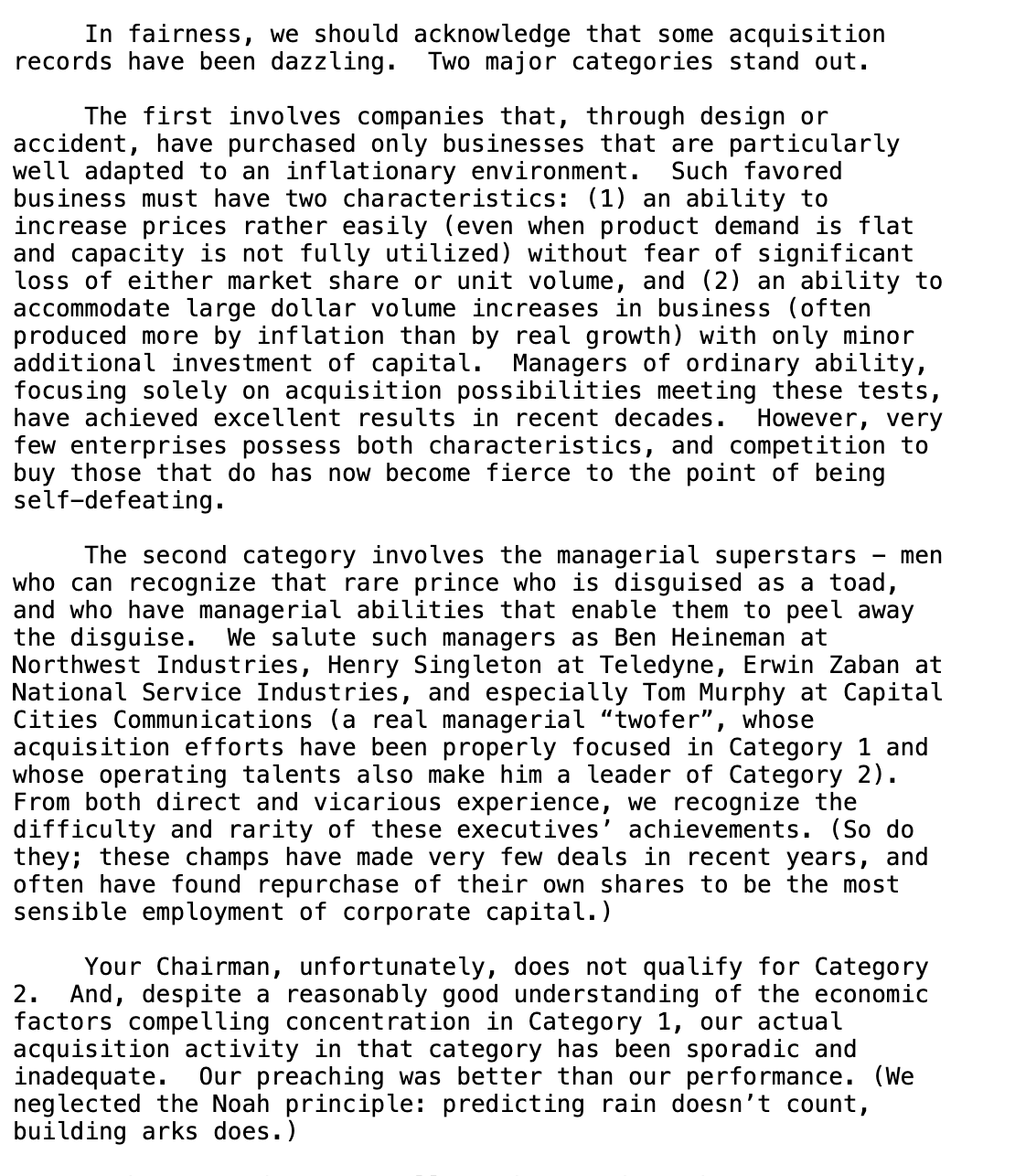
A business built for inflation needs two things:
the ability to raise prices without losing volume even when demand is flat, and
the ability to grow sales without pouring in a lot of new capital.
Here's why the hike itself matters less than people think: A company only pays more interest on debt that actually reprices. Coke's Q2 release shows about $6.5 billion coming due in the next year. A quarter point on that is roughly $16 million. Coke earned $4.4 billion GAAP in the quarter. They cover the Fed's whole decision in about nine hours.
The thing that actually hurts you is the inflation that caused the hike. Energy is up 16.3% over the year, gasoline 27.4%. Every business I own is deciding right now whether it can pass that on. The same CPI table tells you who can: airline fares are up 23.4% over the year, fuel passed straight to you.
It's important to not confuse this with "stocks are an inflation hedge." Buffett argued the opposite in 1977: the average company earns about 12% on equity like a bond coupon and inflation eats it. Most stocks don't protect you. The ones that pass those two tests do.