
LYV
Live Nation Entertainment Inc
Live Nation's Miraculous Flywheel
Everyone says it: Live events are the post-pandemic gold rush. Who is better fit to capitalize that more than Live Nation?
If you've been to a concert or live event since the pandemic, you've probably seen Live Nation tents across the venue.
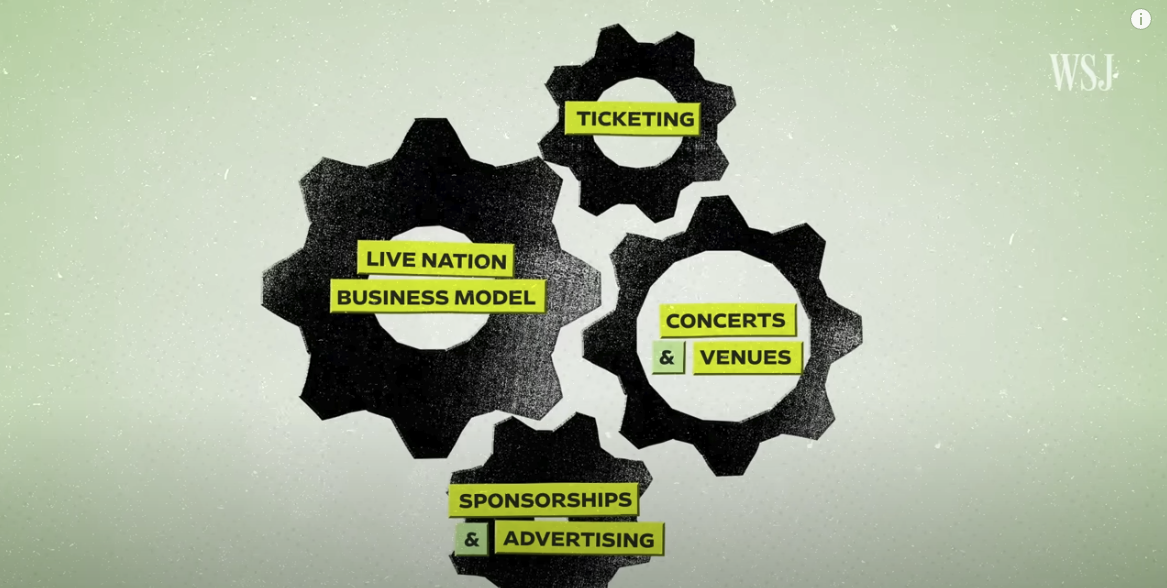
But the business has created an impressive flywheel- a self-reinfocing system where each segment of its operations bolster the others, creating a cycle that will continue to amplify Live Nation's dominance in the live entertainment industry (unless regulators step in-- more on that later)
Here's how their Flywheel works:
Ticketing: Live Nation owns Ticketmaster (since 2010), this control over ticketing allows Live Nation to collect service fees and gather valuable consumer data. They currently own 80% of all ticketing, according to competitor Stubhub.
Concert Promotion: With the profits from ticketing, Live Nation promotes concerts and tours. They can offer artists lucrative deals, sometimes even absorbing losses on promotions, because they recoup profits through ticketing and other high-margin areas.
Venue Ownership and Management: Live Nation owns or operates hundreds of venues worldwide (such as House of Blues). By controlling these spaces, they ensure that events promoted by them are held in their venues, keeping more revenue in-house.
Artist Management: Through its Artist Nation division, Live Nation manages a roster of artists. This relationship enables them to influence touring decisions, often steering artists toward Live Nation venues and services, further feeding the flywheel.
Ancillary Revenue Streams: Beyond ticket sales, Live Nation capitalizes on additional revenue sources such as merchandise, concessions, VIP packages, and sponsorships. These high-margin segments significantly boost profitability and are integral to the flywheel’s momentum. They also invest in dozen of companies (such as Liquid Death), which can then become an exclusive good at their venues.
Each component of Live Nation’s business feeds into the next:
Ticketing drives concert promotion by providing data and revenue.
Concert promotion fills venues, maximizing their utilization.
Venue operations generate ancillary revenues, enhancing profitability.
Artist management ensures a steady supply of talent for promotions and venues.
So is it working?
Yes*
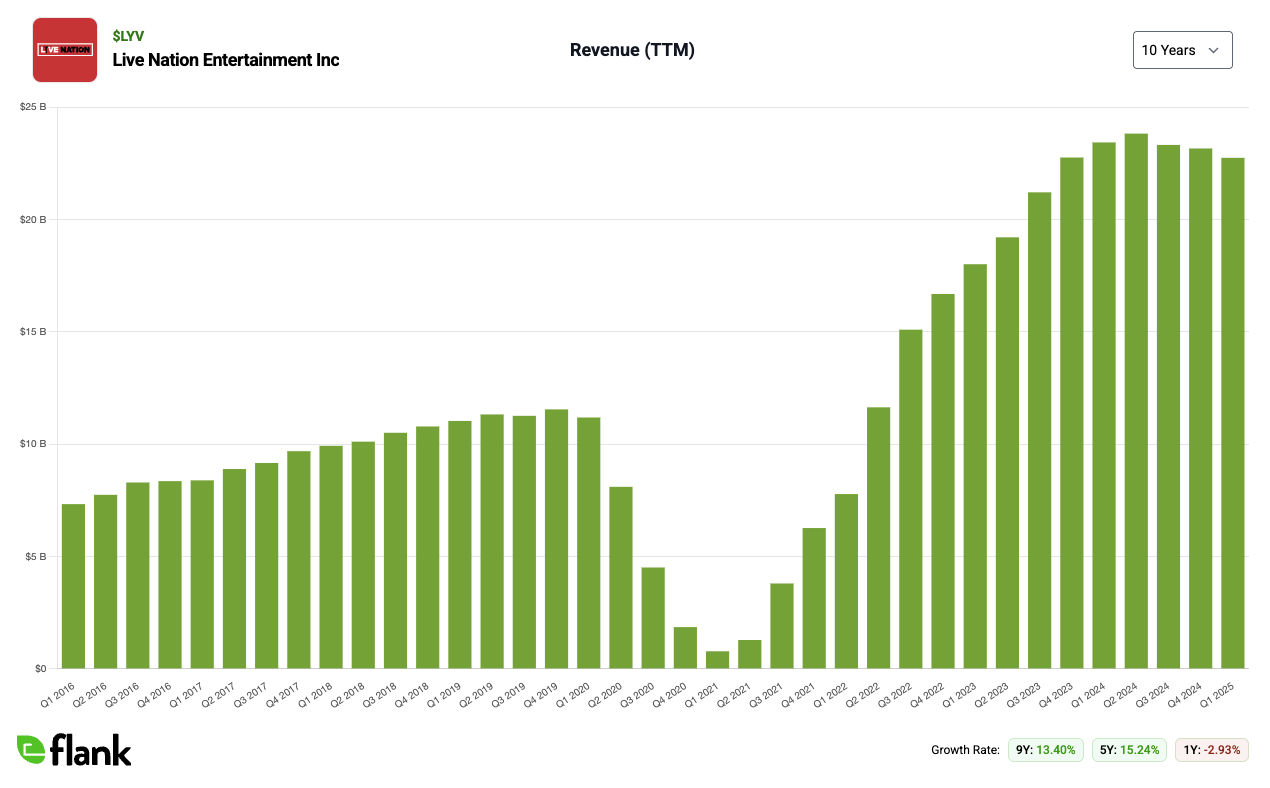
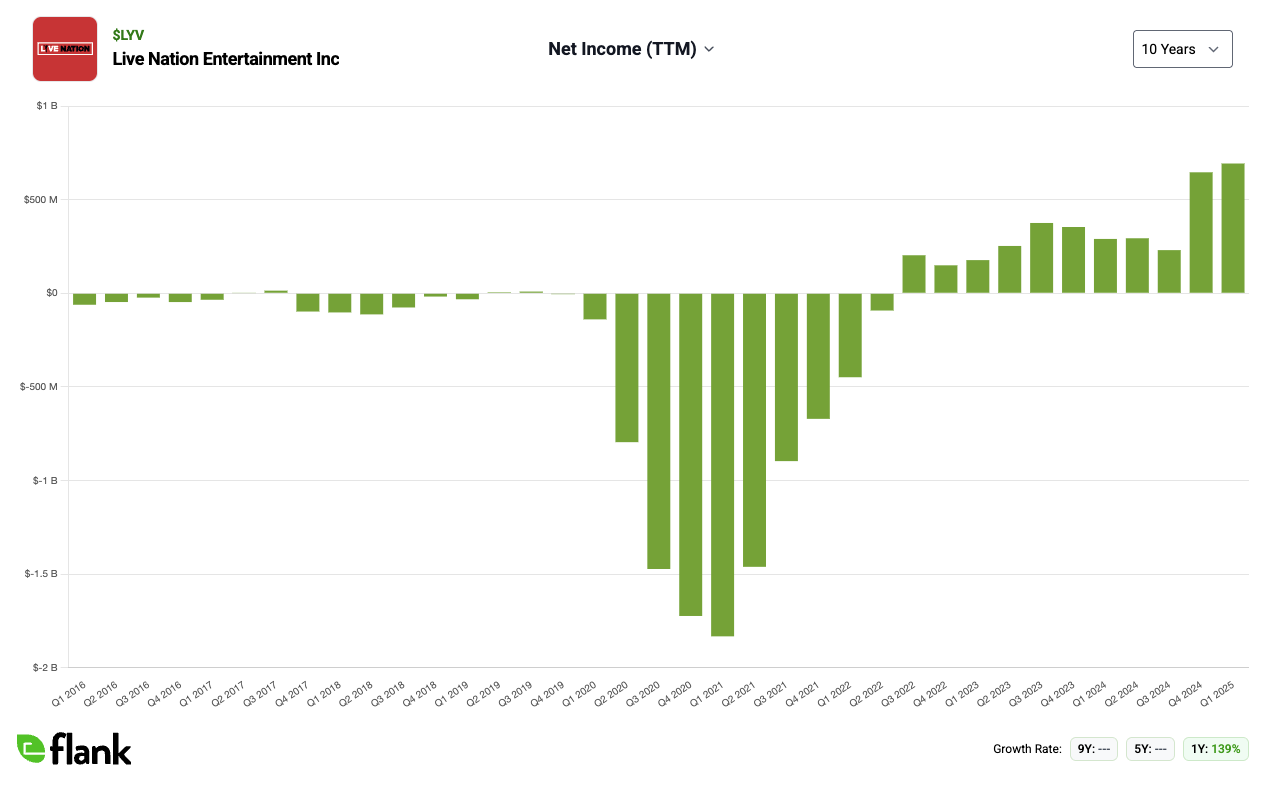
The business is continuing to grow, but competition is fierce. Q1 revenue was down, but net income grew an impressive 139% y-o-y, due exclusively to this flywheel feeding into higher margin segments.
It's a fascinating company, I don't own any of their stock, but would love your thoughts