

Berkshire Letters
2024 Letter: Further Analysis
Okay so i decided to put my first synthesis and the letter into Claude and asked for feedback. Not in my writing per se, but in my synthesis towards improving understanding. I am still not as gung ho about the AI tools as everyone else seems to be but this proved to a valuable exercise. Here is the takeaways i gathered from that exercise.
1. I excluded mentioning the performance table at the bottom of the letter. I did this intentionally though as i figured it was understood that Berkshire's methods have been beating the market historically, that's why we are all here lol.
2. I skipped over the float concept in the insurance deep dive. I did this because David covered the Float as a core piece of the business in his Company research steps. I stand by my exclusion, read his synthesis as it is really cool the function this has for Berkshire.
3. Japan! This is the one that i feel like i most poorly represented and did gain a lot of deeper understanding upon further inquiry. This post will be about my learnings of their business dealings in Japan.
4. Copied from Claude: "The minority vs. controlled stakes distinction was touched on but not fully developed. Buffett makes a nuanced point: minority stakes give you flexibility (you can sell if you're wrong) but no control over management or capital. Controlled businesses give you control but no exit. These are genuine trade-offs that shape how you should think differently about buying stocks versus buying whole businesses." I don't feel like there is much to expand on here.
Japan! Such a cool business move and lots of understanding to be gained by the strategy and decisions made by Berkshire in their Japan investments. The two big pieces of this investment are: the assessed amazingly low prices for the value of the five major Japanese trading houses ("sogo shosha"), and the yen-hedging strategy (so cool!).
The Sogo Shosha are assessed to be amazing companies with great fundamentals, they deploy capital well, and they have management that is shareholder friendly (modest executive pay, dividends and buybacks as necessary etc). They are cash cows too. They pay handsomely in dividends and this is capitalized upon by the yen-hedging strategy — borrowing in yen to fund yen-denominated investments, neutralizing currency risk while pocketing a spread between dividend income (~$812M) and debt cost (~$135M). That's an elegant piece of capital allocation thinking that's worth understanding.
The giant trading houses own hard assets—energy, metals, food—which means they can withstand rising commodity prices. The Japanese companies, which themselves command a combined market value of $440 billion, also benefit from the weakening yen, since they earn billions in U.S. dollars while reporting earnings in yen; the currency conversion alone juices profits.
The basic setup of Yen-Hedging
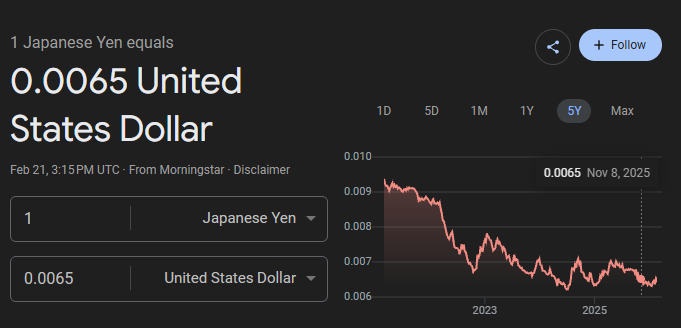
Berkshire wants to invest in Japanese companies. Those companies trade in yen, pay dividends in yen, and operate in Japan. If Berkshire just converted US dollars to yen to buy the stocks, they'd have a problem: if the yen weakens against the dollar over time, their investment loses value in dollar terms even if the Japanese companies perform well. Currency risk could undermine the whole thesis.
So instead of funding the investment with dollars, Berkshire borrowed money in yen — issued yen-denominated bonds. Now their balance sheet looks like this:
Asset: Japanese stocks, valued in yen, paying dividends in yen
Liability: Yen-denominated debt, with interest payments in yen
If the yen falls, yes — their Japanese stocks are worth less in dollars. But their debt is also worth less in dollars. The two largely cancel each other out. That's the hedge. They've matched the currency of their assets to the currency of their liabilities.
Berkshire first invested in the five trading companies in July 2019, spending $6.5 billion in total to acquire 5% stakes in each firm. Between 2023 and last year, it spent another $7.3 billion on the five companies, boosting the size of its stakes. That $13.8 billion cash expenditure is now worth around $38 billion—a $24 billion gain.
The investment epitomizes Buffett’s smart buying: the yen denominated debt he borrowed to acquire his stakes costs less than 1% per year, while the trading houses were paying dividends of about 4% per year.
Why this is quintessentially Buffett
It hits several of his core principles at once. The businesses were undervalued by his assessment. The investment is designed to be held for decades, so short-term currency noise doesn't matter. The structure generates income while he waits. And the downside is limited because the currency exposure is neutralized.
He's not making a bet on the yen. He's not making a bet on interest rates. He's simply saying: these are good businesses at cheap prices, here's a way to own them without taking on risks I don't need to take.
The more important point for value investing
Buffett's Japan thesis wasn't primarily a currency play. The currency hedge was just housekeeping — a way to remove a risk he didn't need to take so he could focus on the actual thesis, which was that these were wonderful businesses trading at cheap prices.
That's the lesson to take away. When evaluating any foreign investment as an individual, the question is the same as always: do I understand the business, is it good, and is it cheap? Currency risk is a factor to be aware of, but it shouldn't be a blanket reason to avoid foreign markets entirely. That would mean avoiding a large portion of the world's best businesses.
The more legitimate concern for individual investors in foreign markets is usually something different — do you actually understand the business and its competitive environment well enough when it operates in a different language, culture, and regulatory system? That's a harder problem than currency risk, and worth thinking about more seriously.