

GS
Goldman Sachs Group Inc
How Do They Make Money?
How Do They Make Money?How does Goldman Sachs make money?
Going into the annual report...
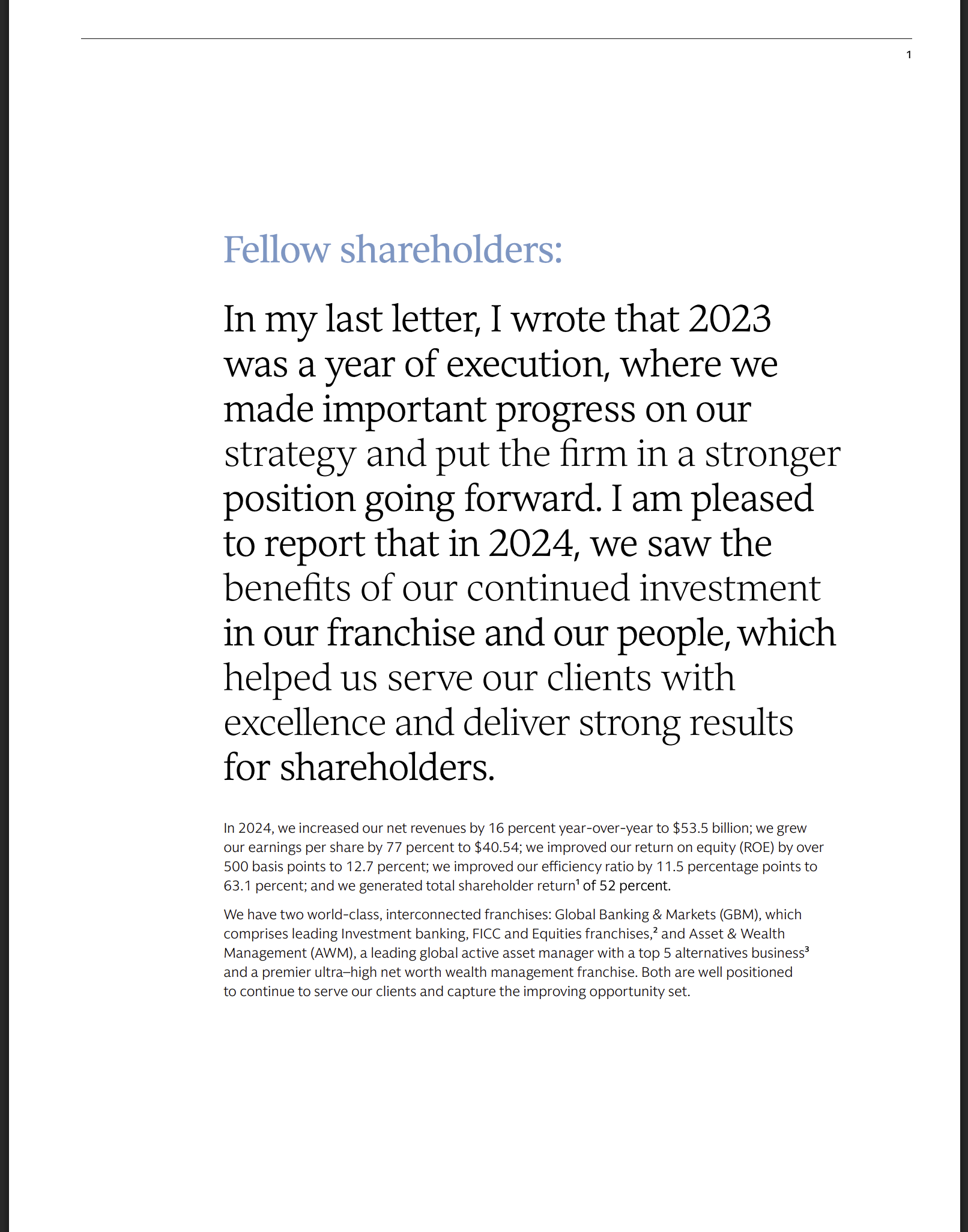
First thing.. we get a letter from the CEO (YAY!). Thanks DJ Solomon for treating us shareholders with some respect!
## Goldman's Business Segments:
Goldman has 3 business segments:
Global Banking & Markets
Asset & Wealth Management
Platform Solutions
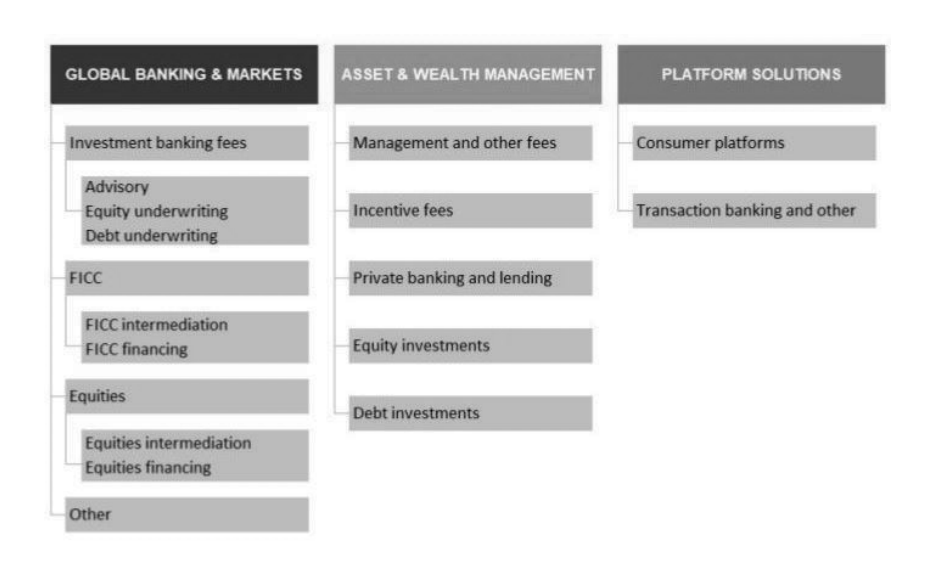
## Global Banking & Markets
Investment Banking Fees
Advisory: Fees from advising corporations, governments, and institutions on mergers, acquisitions, restructurings, and other strategic transactions.
Underwriting: Fees from helping clients raise capital by issuing equity, debt, and structured securities in both public and private markets.
Market-Making & Client Intermediation
Acting as a market maker in fixed income (bonds, loans, mortgages), currencies, commodities, and equities.
Providing liquidity, taking the other side of trades, and structuring customized derivative products.
Generating spreads and fees by facilitating transactions in both liquid and less liquid markets.
Financing Activities
Fixed Income & Commodities Financing (FICC): Lending against structured credit, asset-backed loans, repo agreements, and commodity financing.
Equities Financing: Prime brokerage services, margin lending, securities lending/borrowing, swap transactions, and portfolio financing for institutional clients.
Additionally, Goldman monetizes execution services, clearing fees, and commissions from trading across global exchanges, supported by its proprietary tech platform Marquee and research arm, which enhances client engagement.
## Asset & Wealth Management
Management & Advisory Fees
Earns recurring fees based on assets under management (AUM).
Fees vary by asset class, product type, and client channel, and are influenced by performance, inflows, and redemptions.
Covers both institutional clients (funds, pensions, endowments) and individual clients (including ultra-high-net-worth families).
Incentive Fees
Earns performance-based fees (a share of profits) when funds outperform benchmarks, especially in private equity, credit funds, and hedge funds.
Private Banking & Lending
Provides loans to wealth management clients (secured by securities, real estate, or other assets).
Earns net interest income from lending and deposits, including through Marcus (its digital banking platform).
Equity Investments
Invests in public and private equity, real estate, and infrastructure.
Generates returns (dividends, capital gains) and also satisfies regulatory requirements (e.g. CRA investments via its Urban Investment Group).
Debt Investments
Invests in or originates credit across the spectrum: senior loans, mezzanine debt, distressed debt, and middle-market lending.
Provides financing for real estate and corporate clients.
## Platform Solutions
Consumer Platforms
Issues credit cards (e.g. Apple Card) and earns net interest income from card lending.
Raises deposits from Apple Card customers to fund lending activities.
Exiting other programs (e.g. GM credit card, transitioning to another issuer by 2025) as part of a strategic refocus.
Transaction Banking & Other Services
Provides cash management, deposit-taking, and payment solutions for corporate and institutional clients.
Earns net interest income on deposits from these activities.
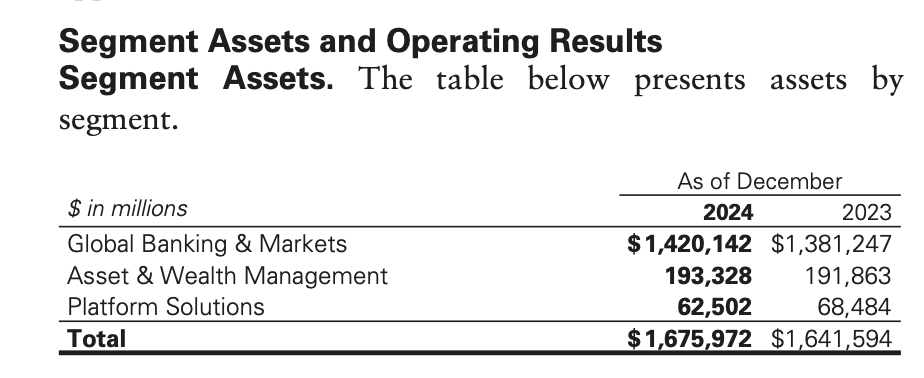
Global Banking and Markets represents their largest revenue source by a large margin
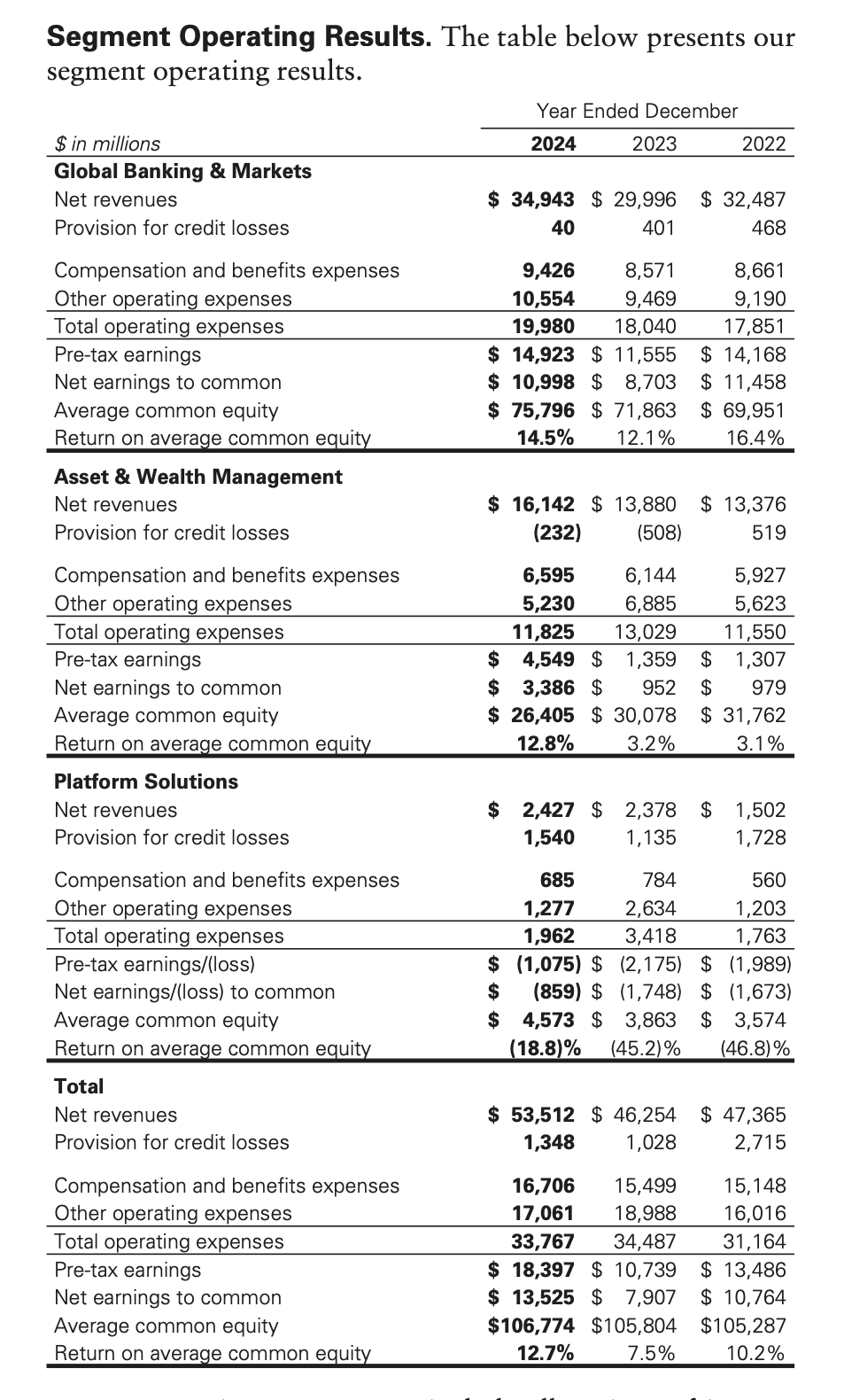
Specific breakdowns of their segment operating results:
My conclusion:
Holy cow $GS is a complex business. I should follow my own advice and say that Banking stocks aren't the best businesses for individual investors to analyze, but I am interested in learning more about how the system works.