

NOK
Nokia Oyj
Is this a sheep in wolfs clothing or does Nokia have some fight left in it?
Understand The Income StatementSo, Nokia Oyj is not a US firm but it is listed on the US stock exchange so to get these documents you need to look at the form 20-K.
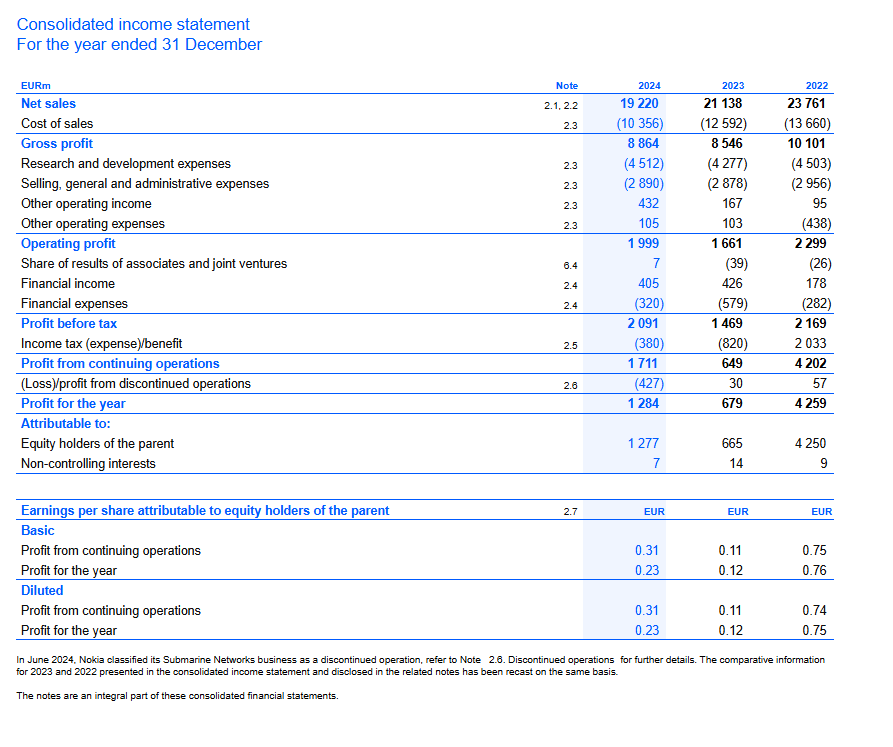
The biggest thing that jumps out at me is there is not a sizable obscure asset called Goodwill jumping out at me.
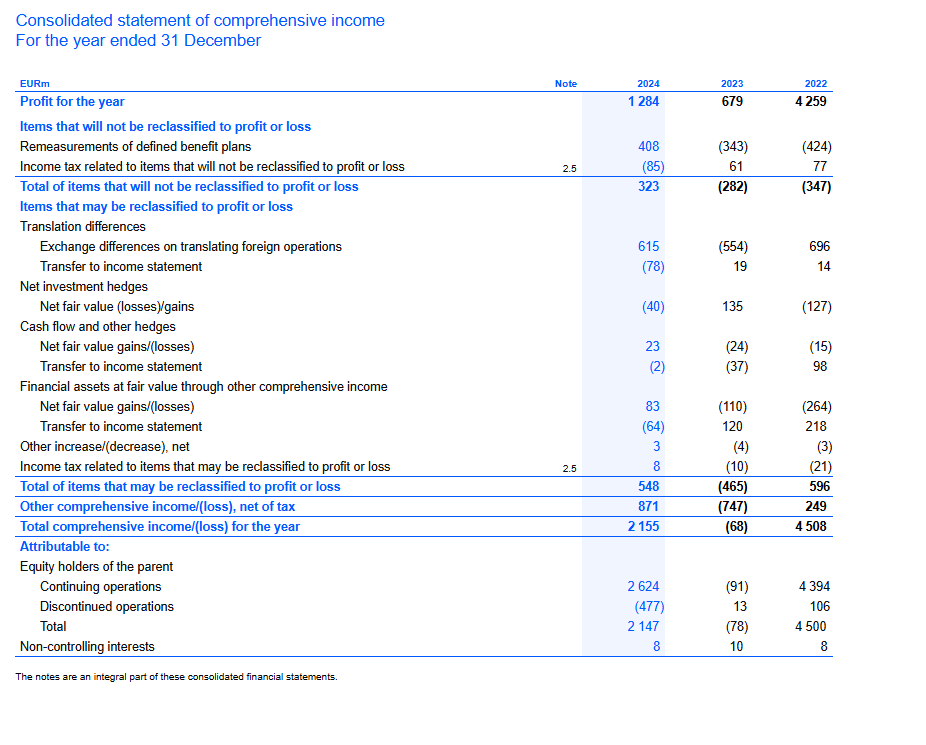
However, if you look at their asset breakdowns
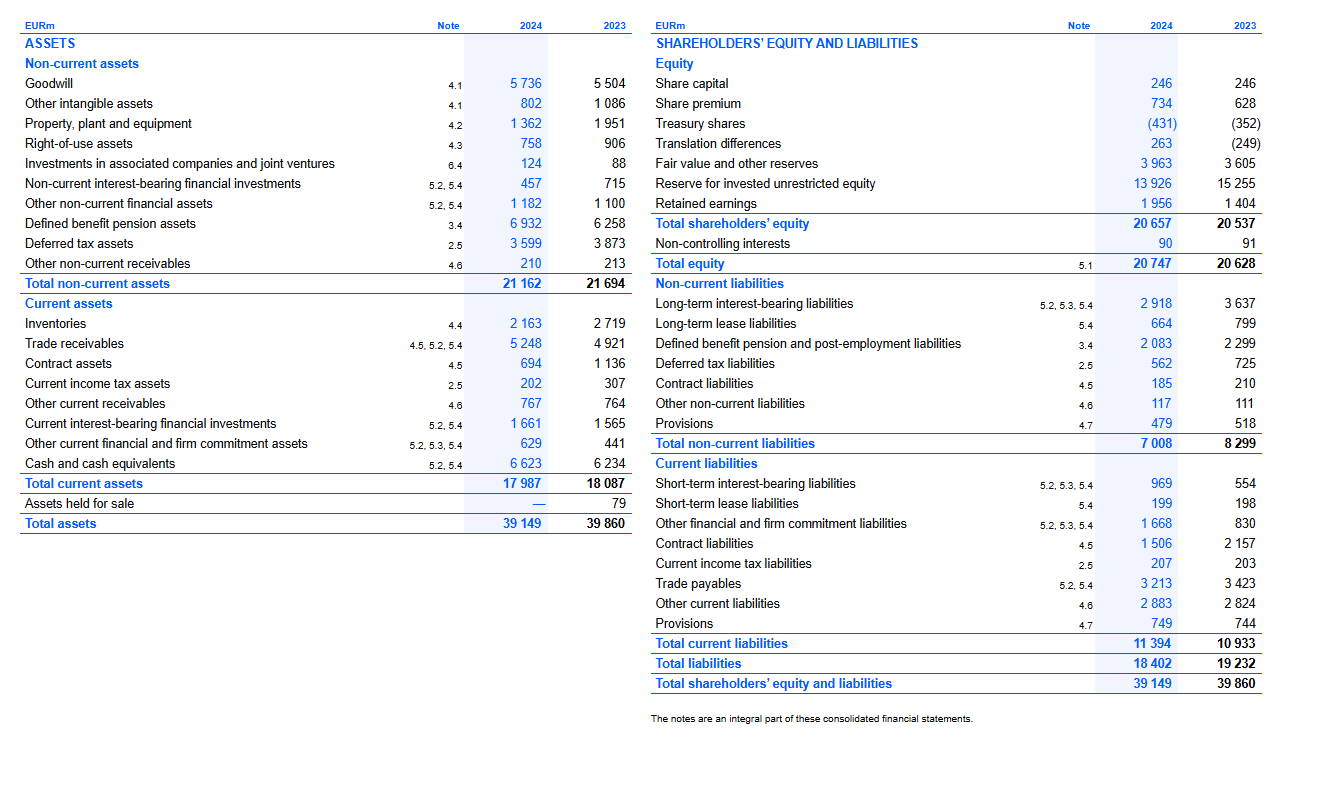
Boom 5 billion Euros in good will. How is Nokia defining good will?
Accounting policies
Intangible assets acquired separately are measured on
initial recognition at cost. Internally generated intangibles,
except for development costs that may be capitalized, are
expensed as incurred. Development costs are capitalized
only if Nokia has the technical feasibility to complete the
asset; has an ability and intention to use or sell the asset;
can demonstrate that the asset will generate future
economic benefits; has resources available to complete
the asset; and has the ability to measure reliably the
expenditure during development.
The useful life of Nokia’s intangible assets, other than
goodwill, is finite. Following initial recognition, finite
intangible assets are carried at cost less accumulated
amortization and accumulated impairment losses. Intangible
assets are amortized over their useful lives, generally three
years to ten years, using the straight-line method, which is
considered to best reflect the pattern in which the asset’s
future economic benefits are expected to be consumed.
Depending on the nature of the intangible asset, the
amortization charges for continuing operations are included
in cost of sales, research and development expenses or
selling, general and administrative expenses.
Goodwill is allocated to the cash-generating units or groups
of cash-generating units that are expected to benefit from
the synergies of the related business combination and that
reflect the lowest level at which goodwill is monitored for
internal management purposes. A cash-generating unit, as
determined for the purposes of Nokia’s goodwill impairment
testing, is the smallest group of assets generating cash
inflows that are largely independent of the cash inflows
from other assets or groups of assets. The carrying value
of a cash-generating unit includes its share of relevant
corporate assets allocated to it on a reasonable and
consistent basis. When the composition of one or more
groups of cash-generating units to which goodwill has been
allocated is changed, the goodwill is reallocated based on
the relative fair value of the affected groups of cash-
generating units.
Nokia tests the carrying value of goodwill for impairment
annually. In addition, Nokia assesses the recoverability of the
carrying value of goodwill and intangible assets if events
or changes in circumstances indicate that the carrying value
may be impaired. Factors that Nokia considers when it
reviews indications of impairment include, but are not
limited to, underperformance of the asset relative to its
historical or projected future results, significant changes
in the manner of using the asset or the strategy for the
overall business, and significant negative industry or
economic trends.
Nokia conducts its impairment testing by determining the
recoverable amount for an asset, a cash-generating unit or
groups of cash-generating units. The recoverable amount
of an asset, a cash-generating unit or groups of cash-
generating units is the higher of its fair value less costs of
disposal and its value-in-use. The recoverable amount is
compared to the asset’s, cash-generating unit’s or groups
of cash-generating units’ carrying value. If the recoverable
amount for the asset, cash-generating unit or groups of
cash-generating units is less than its carrying value, the
asset is considered impaired and is written down to its
recoverable amount. Impairment losses are presented
in cost of sales, research and development expenses or
selling, general and administrative expenses, except for
impairment losses on goodwill, which are presented in
other operating expenses
So, lets summarize that
Synergies: The expected cost savings or revenue boosts created by integrating the new company into Nokia's existing Network Infrastructure or Mobile Networks.
Assembled Workforce: The value of having a pre-existing team of highly skilled engineers and researchers (e.g., from the Alcatel-Lucent acquisition or the recent Infinera deal).
Future Technology & R&D: The potential for future innovations that are not yet patented or documented as specific "intangible assets" at the time of purchase.
Market Position: The strategic "foothold" or brand reputation gained in a specific geography or technical niche.
Interesting stuff so far Nokia does not have the software arm Broadcom does.