

KO
Coca-Cola Co
The wide and fierce moat of Coca Cola
Is There A Qualitative Moat?I want to start this step of my research with an excerpt from the 1989 Chairman's letter.
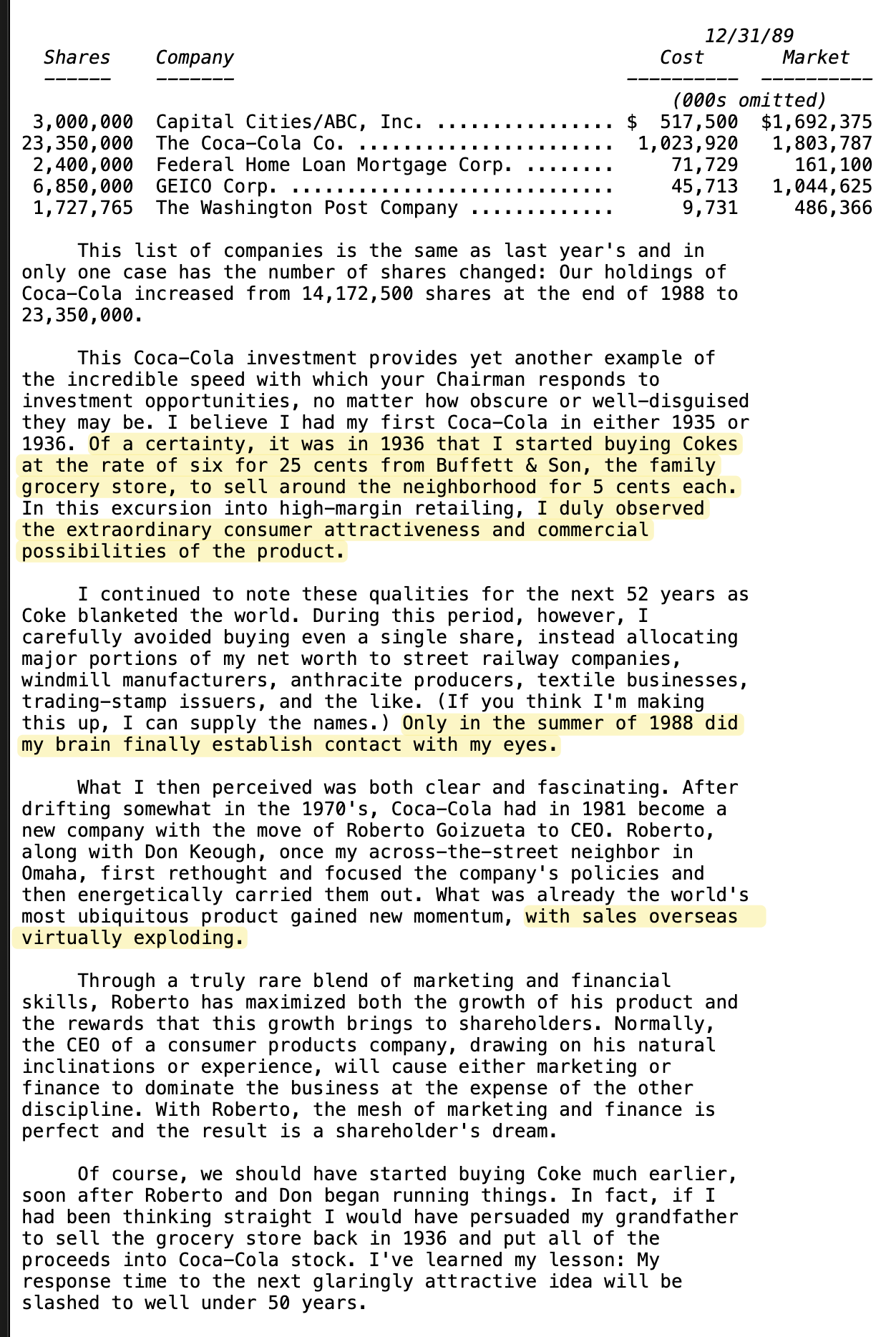
In here, he talks about how he used the world around him to inform his investing (sound familiar?).
In 1936, he was buying Cokes and selling them for 5 cents each, and at that time he should have recognized the consumer attractiveness and commercial possibility in the Coke product.
He go so far to say that he should have convinced his grandfather to sell their family grocery store and put it into Coca-Cola stock.
I thought it was interesting that he says the "new" company started after Roberto Goizueta became CEO in 1981 and refocused the company and drove overseas sales growth.
Alright let's go moat-by-moat to see why Coke is considered one of "the Inevitables" by Buffett.
The Moats
1. Brand Moat; the strongest one here
This is the textbook case. The Coca-Cola trademark alone was valued at over $95 billion in 2025, making it by far the most valuable soft drink brand on earth, ahead of Red Bull and Pepsi. People reach for Coke over a chemically near-identical store-brand cola that costs less. That's the definition: consumers pay a premium for the red can.
And critically for your "make sure it's not a fad" test; this brand is 139 years old and spans 26 billion-dollar brands by 2025. Not a fad.
2. Economies of Scale; strong
KO runs an asset-light model: it sells concentrate to ~225 bottling partners who shoulder the capital-heavy work. That lets KO post operating margins around 29 percent in 2025, outpacing the broader consumer staples sector.
Its ~$4B annual ad spend and global purchasing power are costs no challenger brand can match per unit. Scale here lowers KO's effective cost and raises everyone else's cost to compete
The company holds an estimated 45% global value share in the sparkling soft drink category as of late 2025 per BCG Matrix
3. Barrier to Entry Moat; strong
A startup can make a better soda tomorrow. It cannot build Coca-Cola's distribution. The worldwide bottling network and micro-market, last-mile distribution model took a century to assemble. Replicating that reach... every grocer, eatery, roadside vendor, and vending machine across 200+ countries... is so capital- and time-intensive it isn't worth attempting head-on. This is why challengers carve niches (energy, seltzer) instead of attacking the core.
4. Toll/Distribution Moat; partially, at least
KO isn't a literal sole-supplier toll like the App Store. But for a beverage brand that wants global shelf presence, the Coca-Cola system functions like a toll road: it's one of the very few networks that can physically place your product everywhere. That's why KO can act as a distribution partner (e.g., Monster's drinks ride parts of the Coke system). The "toll" is access to the shelf.
Moats Coke does not cleanly have:
Switching Moat: weak. Nothing stops a consumer from buying Pepsi next time. Loyalty is brand-driven, not lock-in-driven.
Network Effect: no. A can of Coke isn't more valuable because others drink it (brand ubiquity is adjacent but not a true feedback loop).
Secrets Moat: the "secret formula" is famous marketing lore, but the real secret isn't the recipe (cola is easily cloned) — it's the system. So I'd call this mythologized. this is something I learned in my research. I definitely thought that they had a secret meeting before this (more below)
Monopoly Moat: no. KO is dominant (~40%+ share) but operates in a genuine duopoly-plus market with active antitrust scrutiny. "Coke" did become a generic verb for cola in parts of the US South, which is the monopoly-moat tell... but legally and competitively it's not a monopoly.
Busting the secret formula myth
Before I started this research, I would have totally thought that Coke enjoyed a secrets moat. in January this year, a YouTuber apparently cracked Coke's secret formula using a mass spectrometer and a year of blind taste tests. The result? A Coke clone that taste testers couldn't reliably tell apart from the original
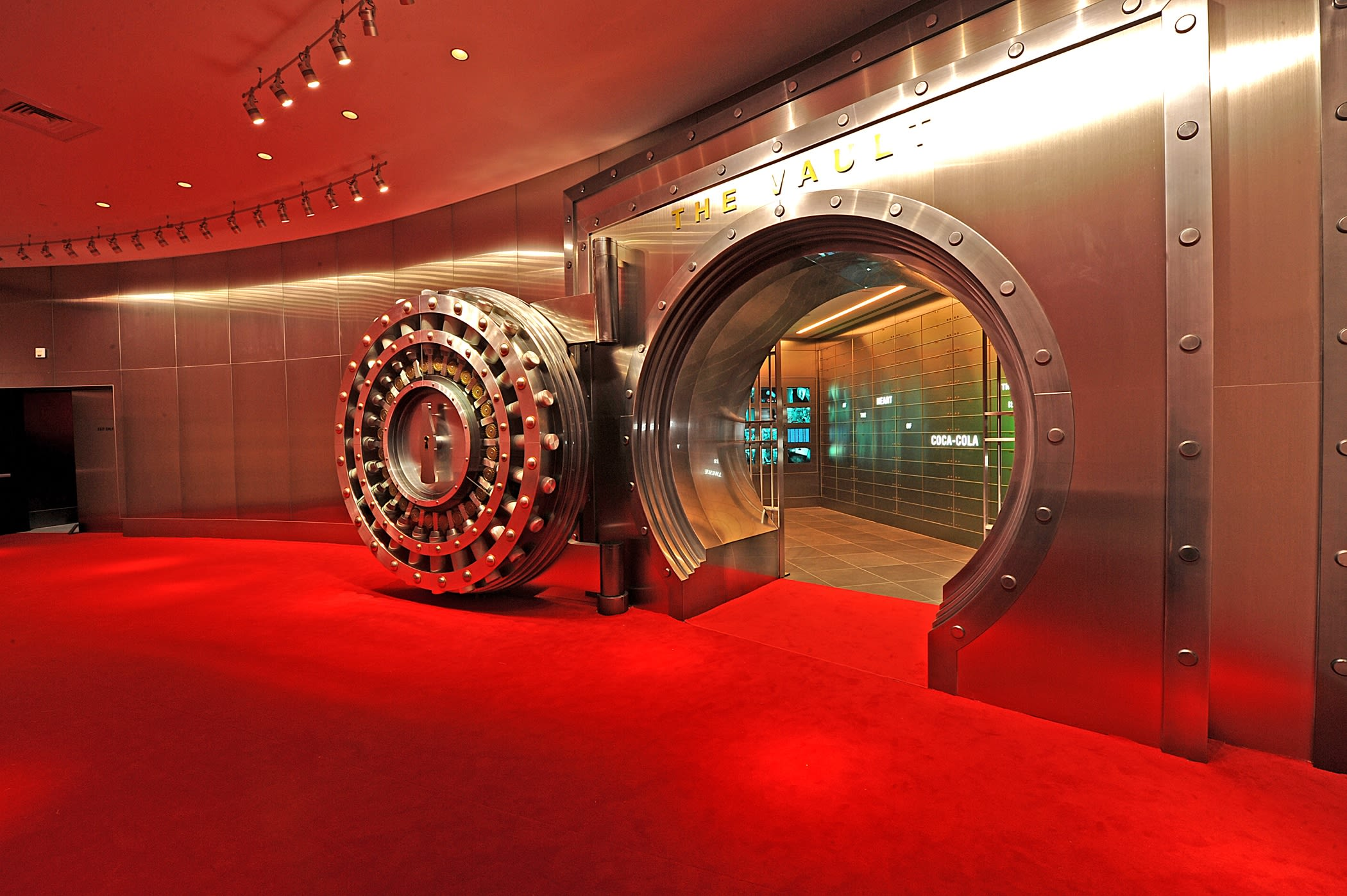
Liesssssss!
“They kept the formulas secret, partly in order to increase sales with a sense of special mystery and to prevent competition, but also to keep people from knowing how cheap the ingredients were and how large the profits,” Mark Pendergrast wrote for CNN.
Conclusion
There's no question that Coca-Cola has one of the widest and most enduring moats of all US stocks.
I'm excited to get into studying the new CEO when I get to the Leadership step, because I think that will be an important next step. I'm also very curious to see the valuation, because everything is lined up, but if the valuation isn't right, I'm not interested in buying it at this time
Sentiment: Bullish