

META
Meta Platforms Inc
Is Meta Muse a game changer for Meta?
Muse is taking the world by storm
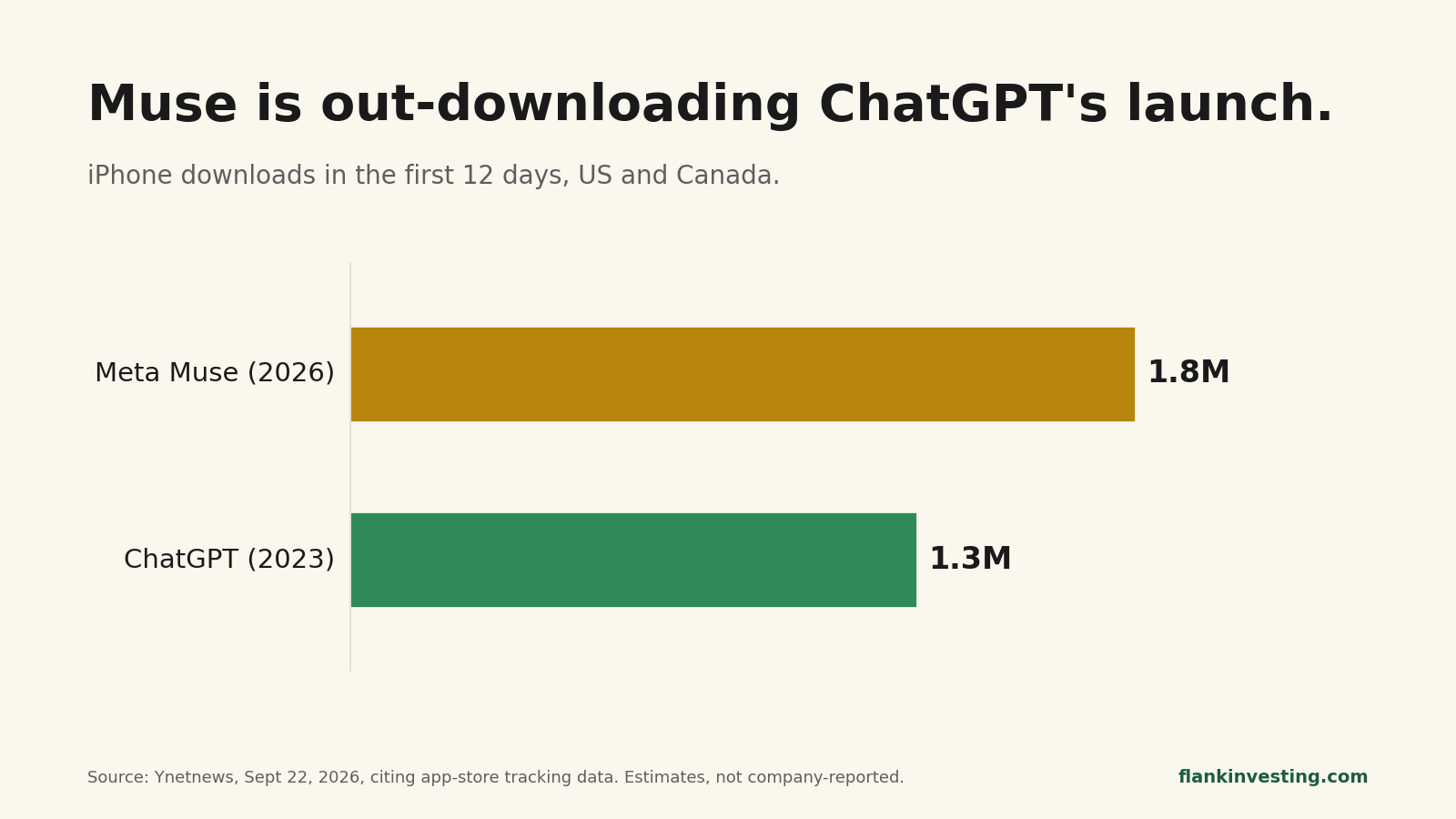
Meta launched Muse on September 8. Two weeks later it has 2.5 million downloads, and it knocked ChatGPT off the top of the App Store. It's even beating ChatGPT's own launch: 1.8 million iPhone downloads in its first 12 days in the US and Canada, versus 1.3 million for ChatGPT back in 2023.
Wall Street noticed. Meta stock jumped 11.4% on Monday alone and was up almost 30% for September, its best month in 13 years.
I saw this article on the NYT this morning:
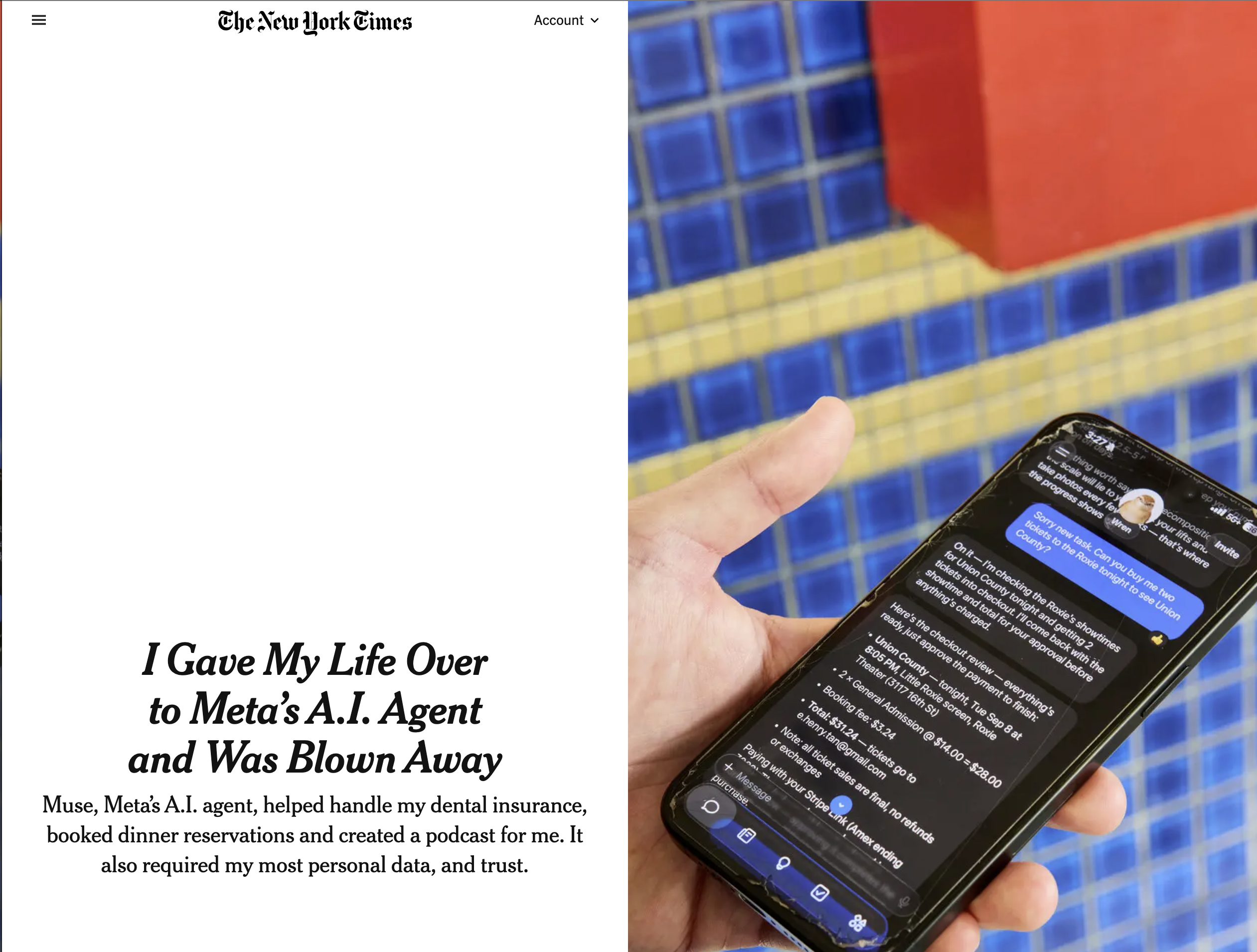
I wanted to dive deeper into what Meta Muse is, how big it could possibly be for the company, and whether this is an opportunity to research the company further.
Meta this Year
Here's the weird part about this year for the company: Meta is making more money than ever and keeping less of it.
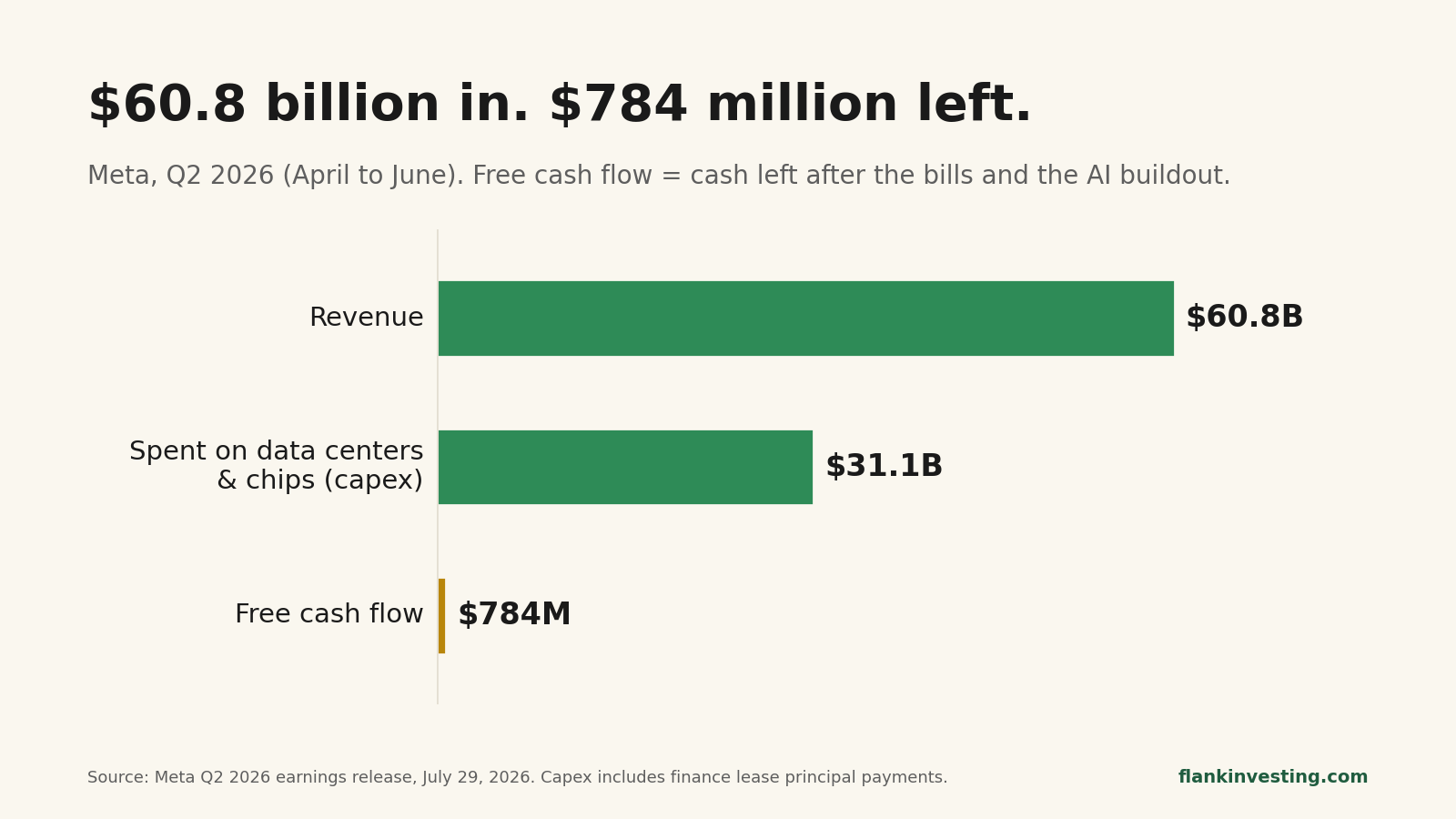
Last quarter (April to June), Meta brought in $60.8 billion in revenue, up 28% from a year ago.
But costs grew 55%, and net income fell 14% to $15.8 billion.
Where did the money go? AI.
Meta spent $31.1 billion in one quarter on data centers and chips.
That's capex (capital expenditures): money spent building stuff that's supposed to pay off for years. After paying the bills and paying for the buildout, Meta had $784 million of free cash flow left. That's about a penny for every dollar of revenue (Meta's Q2 results).
And they're not slowing down. Meta told investors it will spend $130 to $145 billion on capex this year.
The stock has been a roller coaster. It hit its 52-week low in March, then climbed more than 40% off the bottom.
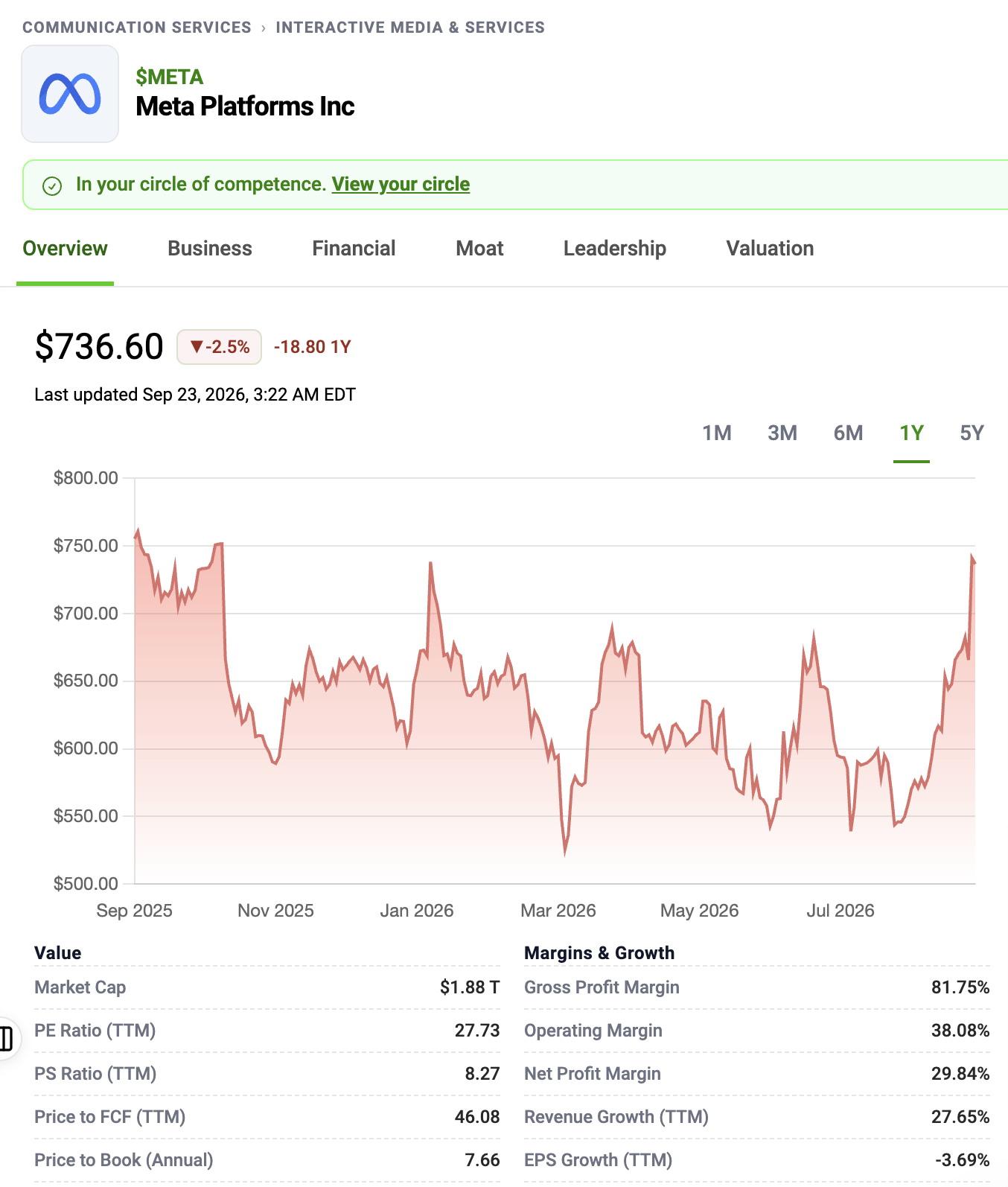
It's at $736.60 as of this morning, a little below where it was a year ago.
You can see what all that spending has done on Meta's Flank page: free cash flow is down 18% over the last year, and the stock trades at 46 times free cash flow.
What is Muse?
Muse is the first consumer A.I. agent from a major tech company that has become publicly available. The tech industry sees agents as the next frontier, far more capable than chatbots. Agents can roam the internet, sign in to websites, fill out spreadsheets and make phone calls on behalf of people... and that’s just the start.
Tell Muse to lower your cable bill, book a flight, or turn a recipe reel into a grocery list, and it opens its own browser, signs in, fills out the forms, and keeps working after you close the app.
It runs on Meta's own new AI model, Muse Spark. It's free with a usage meter, or $20 or $100 a month if you want it doing more (pricing on TechCrunch). It's US only for now, on iPhone, Android and the web.
Now the catch. To do your chores, Muse needs your email, your accounts and your credit card.
This is the same Meta that has settled with the FTC over privacy three times (2011, 2019 and 2023).
Meta says Muse runs on its own separate secure computer and that your Muse data stays out of the ad machine. Two weeks in, a security researcher already found a flaw that could let an attacker act on your behalf, and Amazon has blocked Muse from its store.
How big could Muse be for Meta?
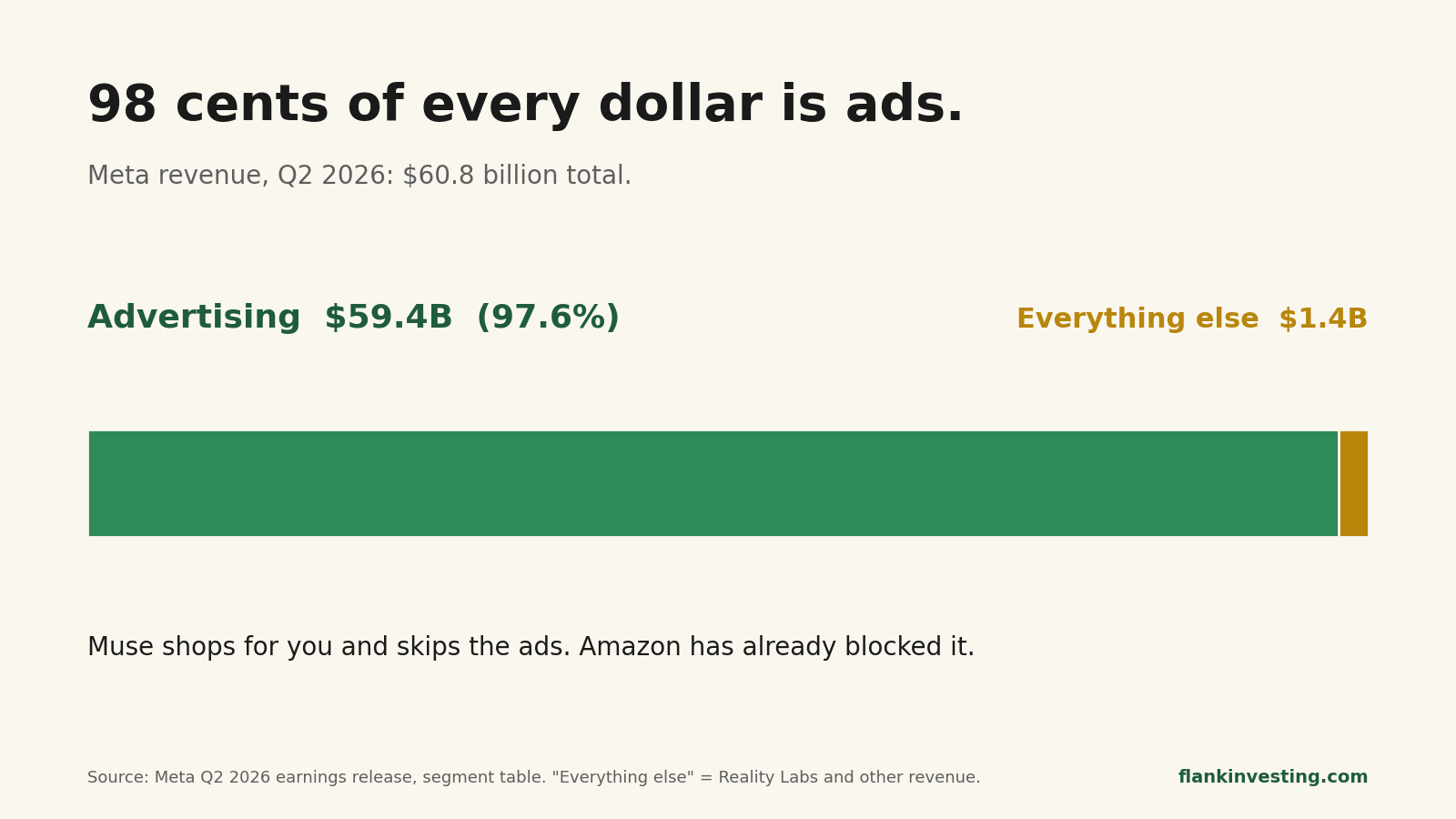
Start with how Meta makes money today: ads. $59.4 billion of last quarter's $60.8 billion was advertising. That's 98 cents of every dollar. (Shoutout to @JVJ, who posted on Flank five months ago that Meta was on pace to pass Google in ad revenue this year.)
Muse is different. Meta says Muse data stays out of its ad systems, so Muse makes money the old-fashioned way: people pay for it.
And here's the funny part. Amazon says Muse broke its terms of use, but the bigger issue is that Amazon makes money on the ads you see while you shop, and Muse never looks at them. Meta built a product that skips ads, and Meta is an ad company. Is this the kick-off to the Agentic Wars? (I'm sure I'll be writing about that a ton in the coming years)
So how big could it be? Here's some napkin math, not a forecast.
Meta has 3.6 billion people using its apps every day. If 1% of them paid $20 a month for Muse, that's 36 million subscribers and about $8.6 billion a year. That's real money.
...It's also about three weeks of what Meta plans to spend on capex this year...
So Muse doesn't have to replace ads. It has to be the reason all that AI spending pays off. Right now it's two weeks old, nobody outside Meta knows how many people are paying for it, and the bill is over $130 billion a year.
My thoughts
Color me interested. I think this is the biggest story in tech right now, and things are changing so fast.
While I'm not comfortable handing Meta all of the processes and trust that would be required to run Muse, I'm curious to see how this develops. Plus, I already have my AI workflow set up and don't feel like I need to add more layers to it
Sentiment: Bullish?