

Investing Fundamentals
Retained Earnings: one of the most underrated line items
Most investors overlook retained earnings. Buffett considers it one of his favorite line items on the balance sheet. It's worth taking five minutes to read this post so you can get a better understanding of retained earnings, because once you understand this one line item, you can get a sense of a company's history of capital allocation in about ten seconds.
What retained earnings actually is
Every quarter, a company earns a profit or takes a loss. Then management makes a choice: pay that money out to shareholders, or keep it and reinvest it in the business.
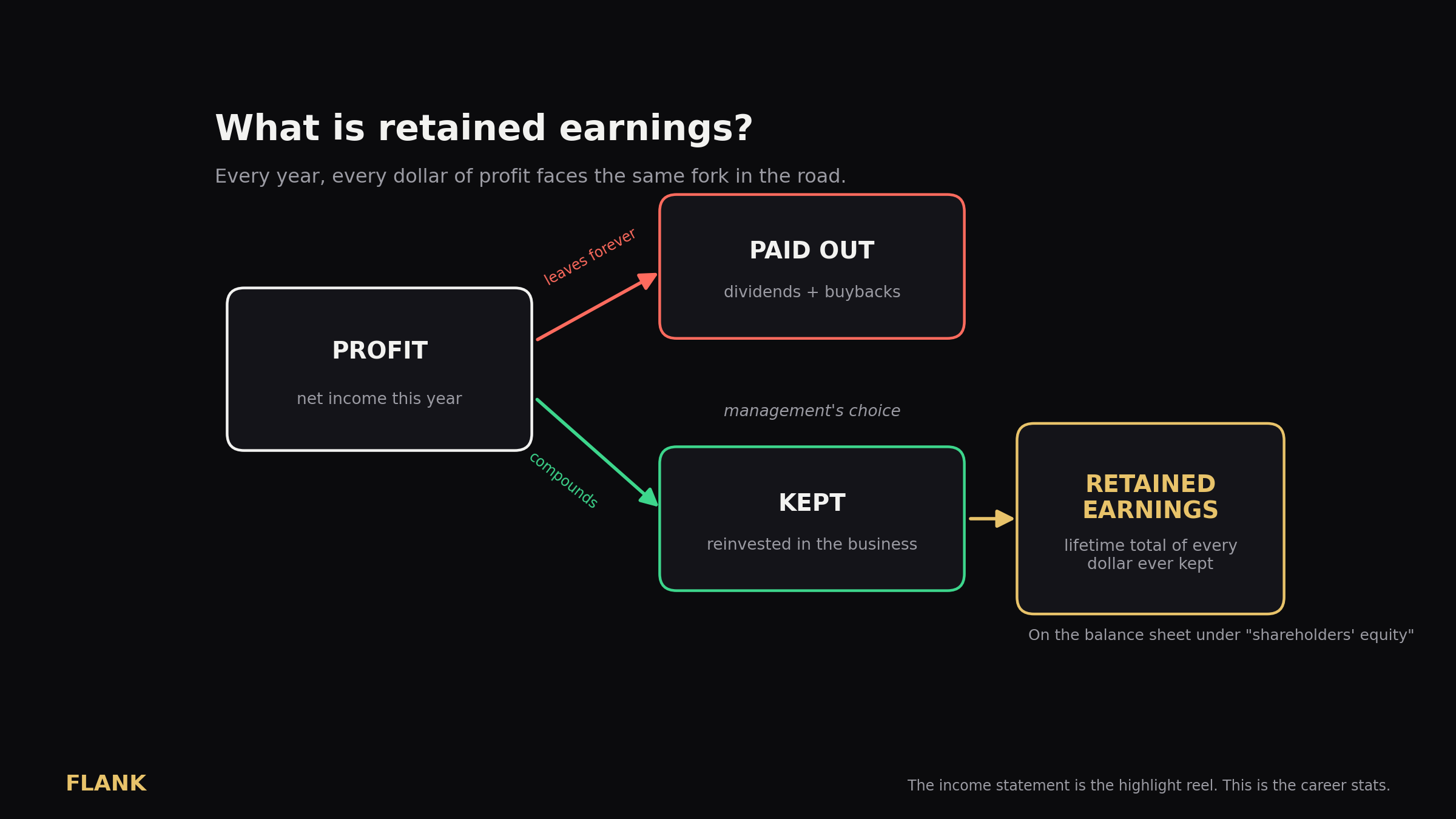
Retained earnings is the running total of that choice. It's every dollar of profit the company has ever earned, minus every dollar it has paid back out through dividends and, at many companies, buybacks. The entire life of the company, added up in one line.
You'll find it on the balance sheet, in the shareholders' equity section, usually labeled "retained earnings" or "accumulated deficit."
Why Buffett loves it
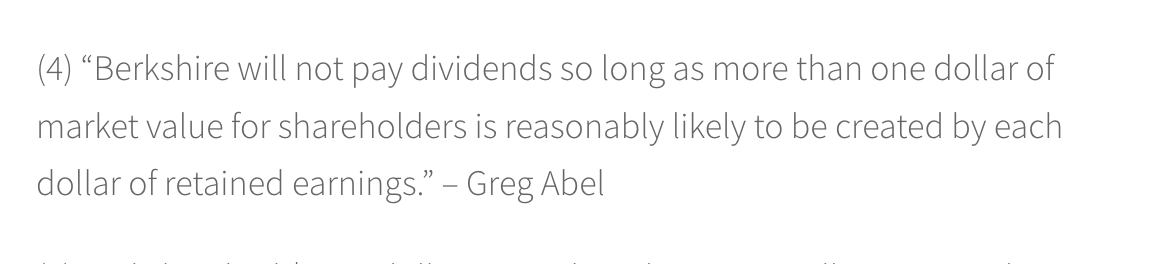
Because it measures the thing he cares about most: what management does with your money. His rule, straight from the Berkshire owner's manual, is that every dollar of earnings a company keeps should create at least one dollar of market value for shareholders. If management can't clear that bar, they should hand the money back to shareholders. Greg Abel repeated that exact promise in Berkshire's newest annual report.
Buffett even devoted a section of his 2019 letter to what he called the power of retained earnings: profits kept and reinvested well become compound interest working inside the business, for you.
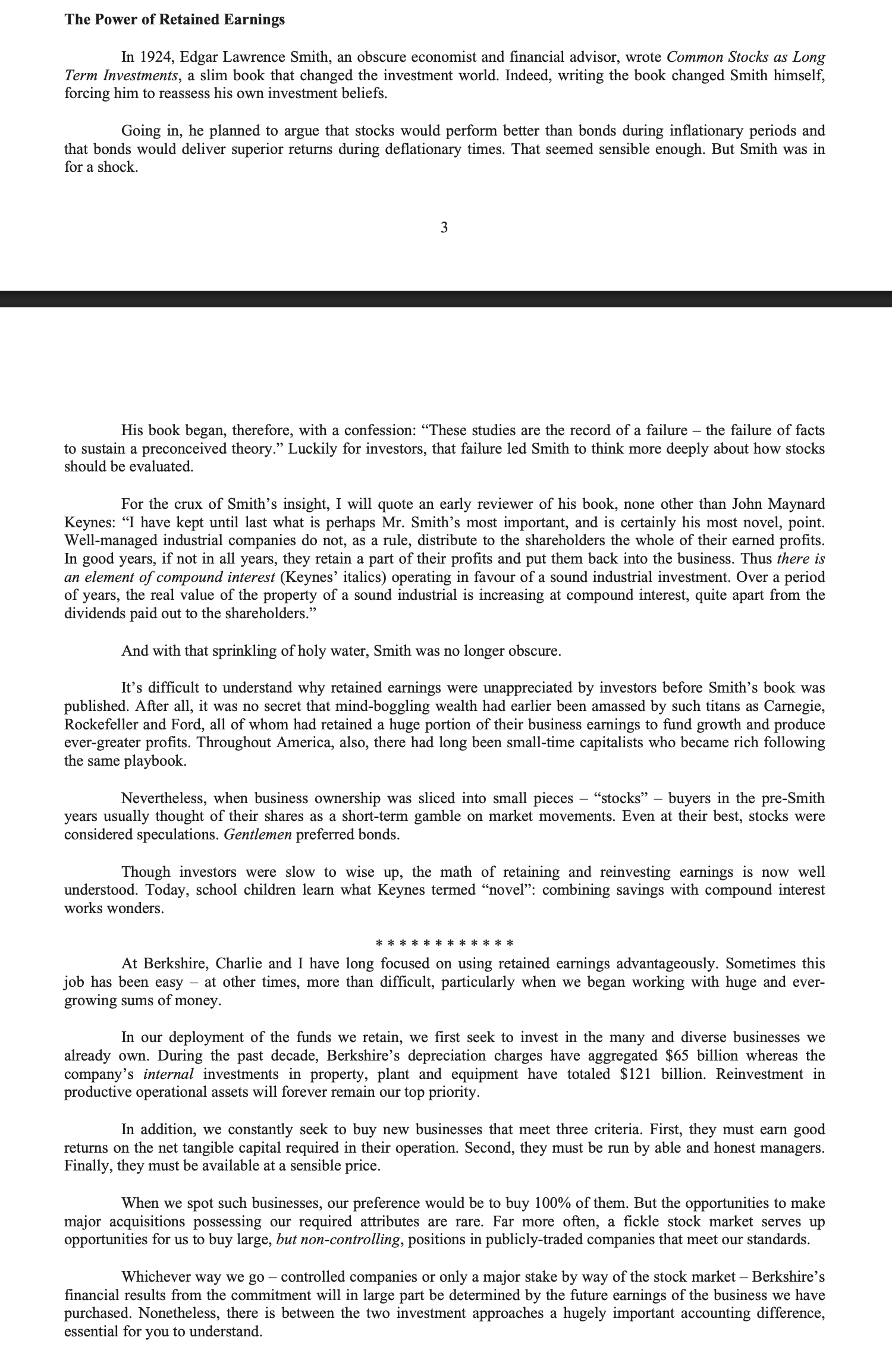
The paragraph that stuck out to me most, is where he mentions a book written in 1924 that was reviewed by none other than John Maynard Keynes, where he said:
“I have kept until last what is perhaps Mr. Smith’s most important, and is certainly his most novel, point. Well-managed industrial companies do not, as a rule, distribute to the shareholders the whole of their earned profits. In good years, if not in all years, they retain a part of their profits and put them back into the business. Thus there is an element of compound interest operating in favour of a sound industrial investment. Over a period of years, the real value of the property of a sound industrial is increasing at compound interest, quite apart from the dividends paid out to the shareholders.”
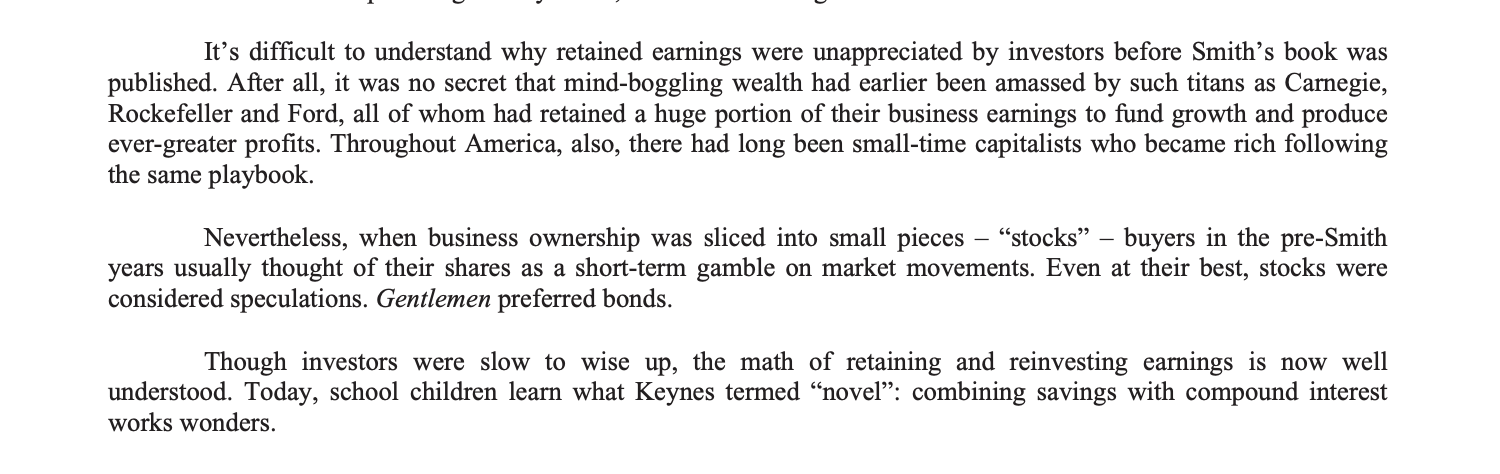
And then this paragraph deserves a closer read
Exactly.
What good looks like
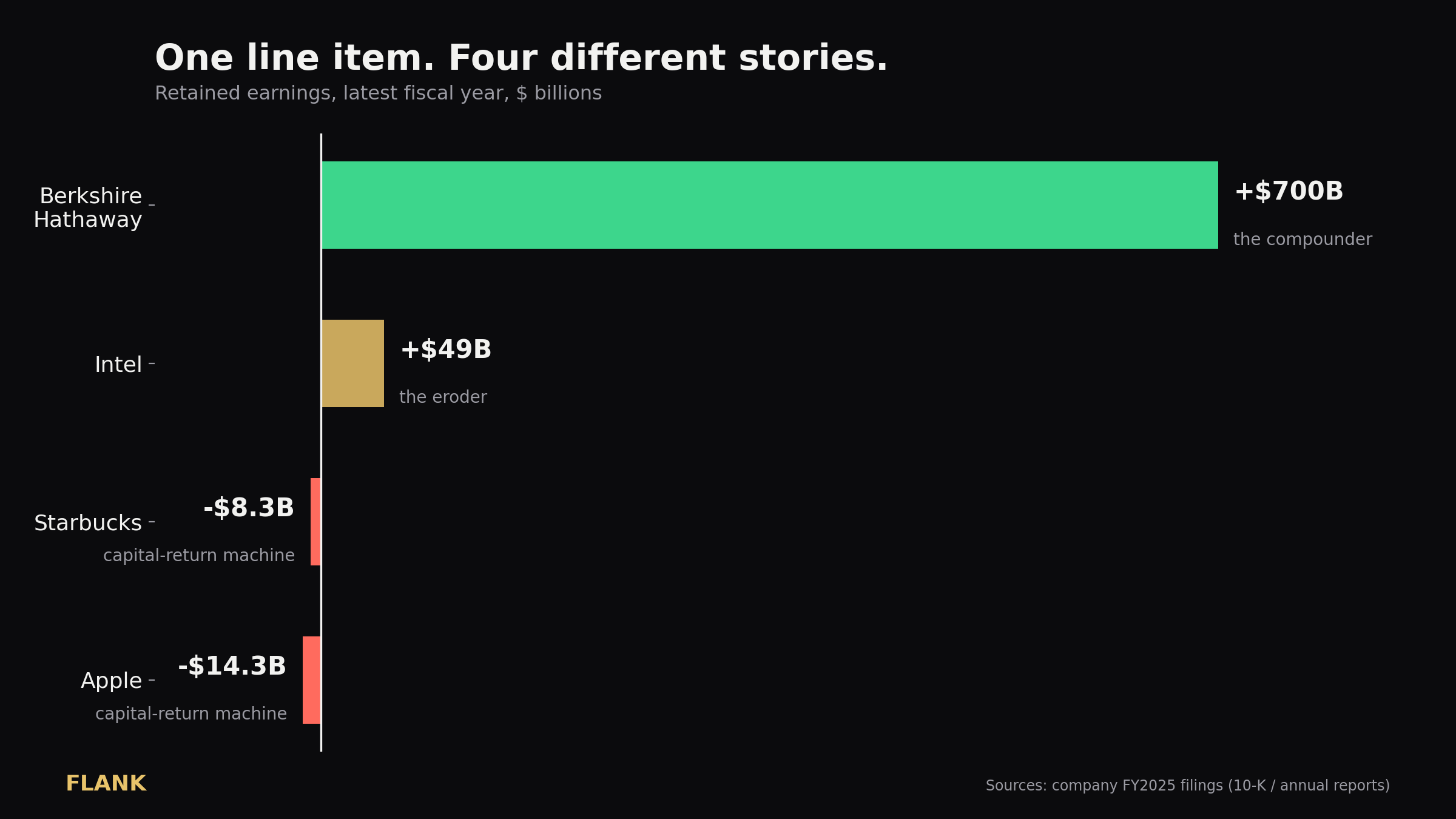
Berkshire itself. It has never paid a real dividend, and its retained earnings now sits around $700 billion. Every dollar kept for 60 years, compounding at roughly 20% annually. A big, steadily growing retained earnings balance at a company whose market value grew even faster: that's the metric working exactly as designed.
What bad looks like
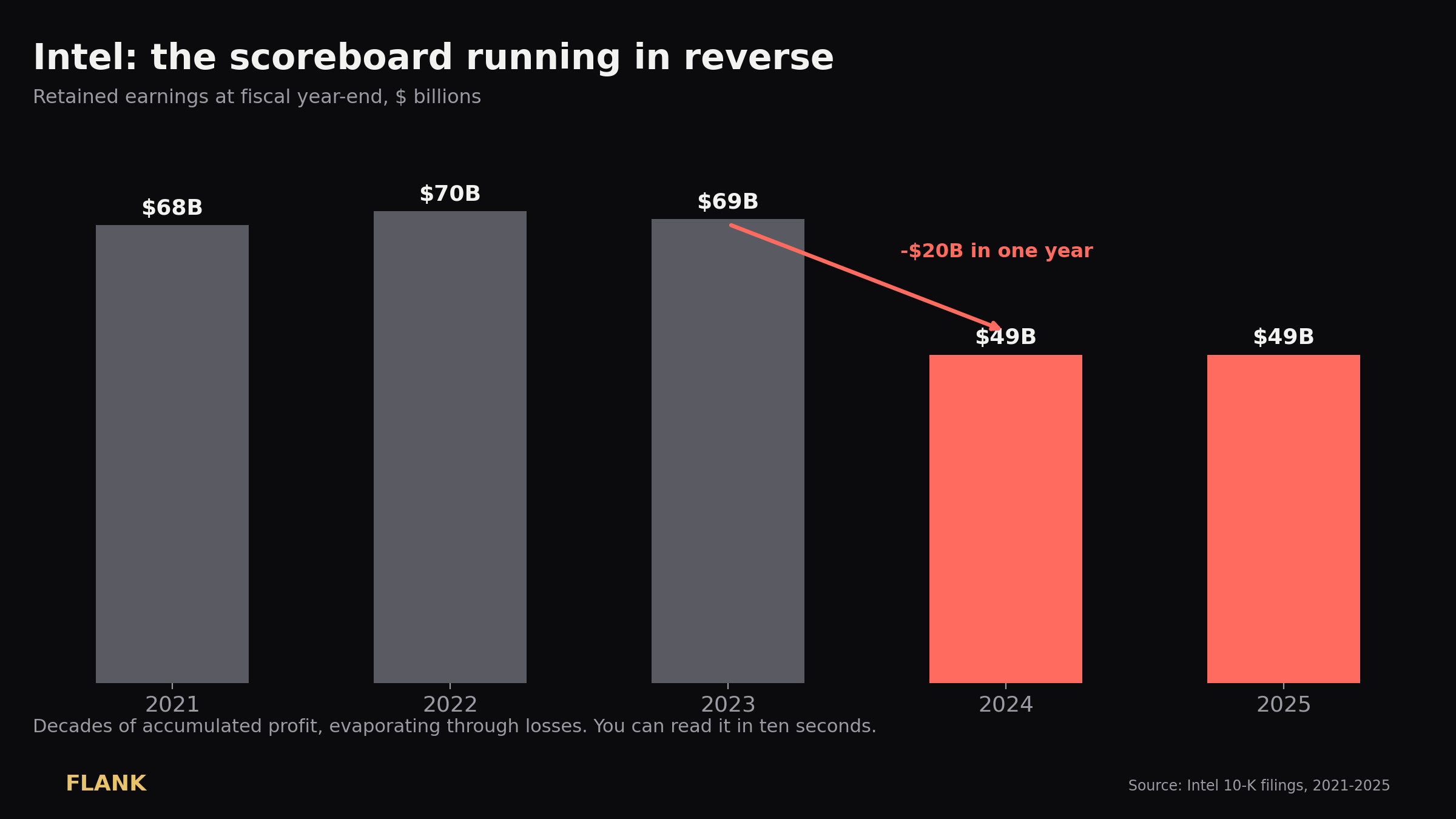
Intel. Its retained earnings peaked near $70 billion in 2022 and has fallen to about $49 billion today. When this number shrinks at a mature company, decades of accumulated profit are evaporating through losses. That's a management report card, and it's not a good one.
I should be clear: it matters what management is doing with the retained earnings. If they're putting it towards reinvesting in the business for something that you believe in and has been communicated well by the company, then that's not really a big yellow flag.
If it's to wallpaper over a losing quarter or an unprofitable year, then that's a really big deal
The trap: negative isn't always bad
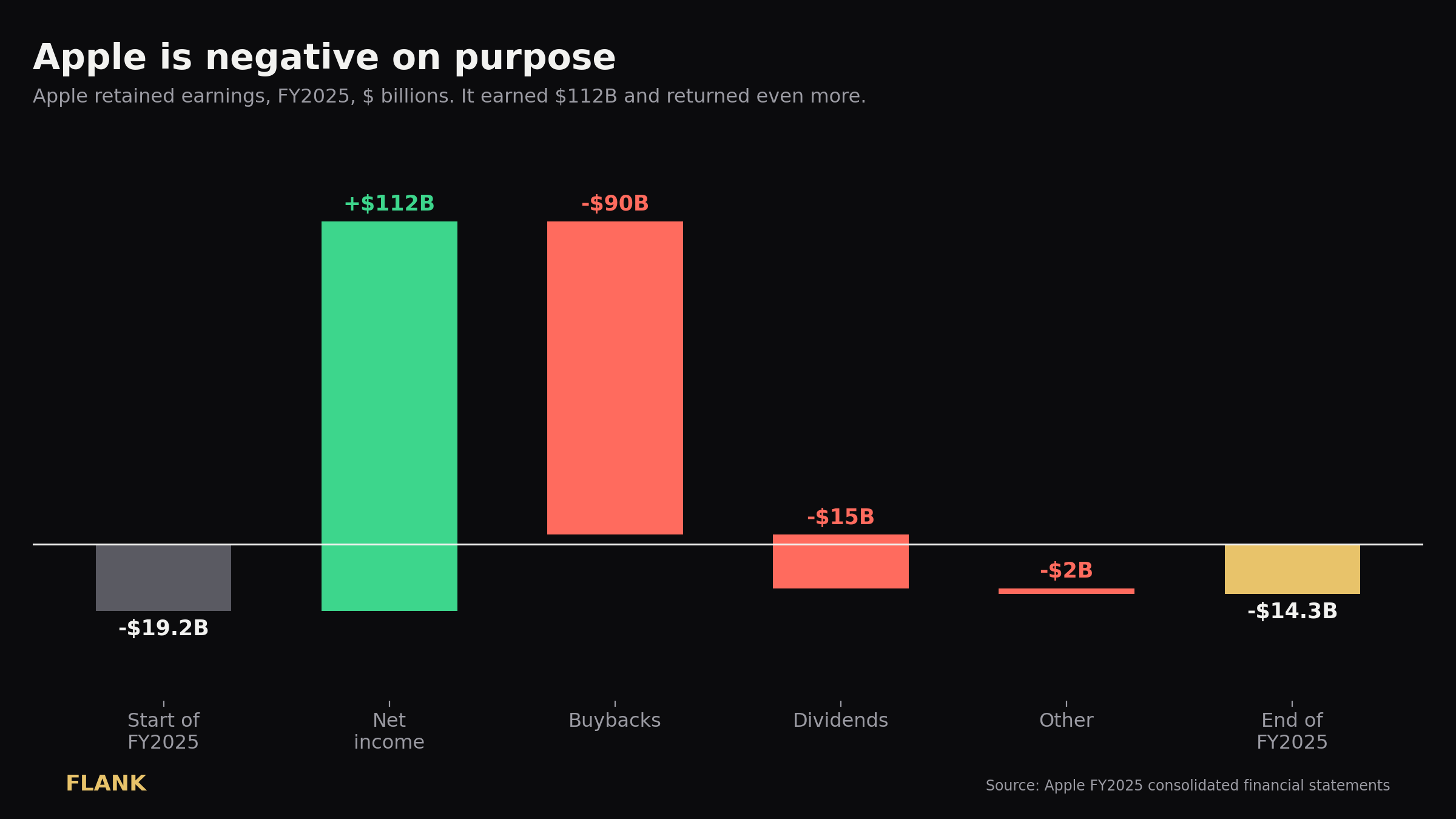
Here's where reading this line pays off. Apple shows retained earnings of negative $14.3 billion. Buffett's biggest winner, negative. Not because it loses money. Apple earned $112 billion last year and returned even more: roughly $90 billion in buybacks plus $15 billion in dividends. It has handed shareholders more cash than every dollar of profit it ever earned. Starbucks shows the same pattern. A negative number can mean a dying company, or a capital-return machine. Positive profits and heavy buybacks tell you which one you're looking at.
How I use it
Three questions, five minutes:
Is retained earnings growing, shrinking, or negative?
If growing, did the company's value grow at least as fast?
If shrinking or negative, is it losses (bad) or capital returns (fine, but requires more research)?
That's the whole skill. Next time you open a balance sheet, scroll past the highlight reel and check the career stats. What management did with everything they kept tells you who they really are.