

COST
Costco Wholesale Corp
Costco, please let your share price fall
How Do They Make Money?Costco is one of the best-run businesses in the world. They are extremely customer-centric, trying to get the unit price as low as possible with razor-thin margins so customers get the cheapest bulk price.
For Costco's business model, almost the entire profit center is how many memberships they sell.
This is best seen in their most recent quarterly report, where membership sales were up 10%, which bled almost exactly into the bottom-line net income being up 10%.
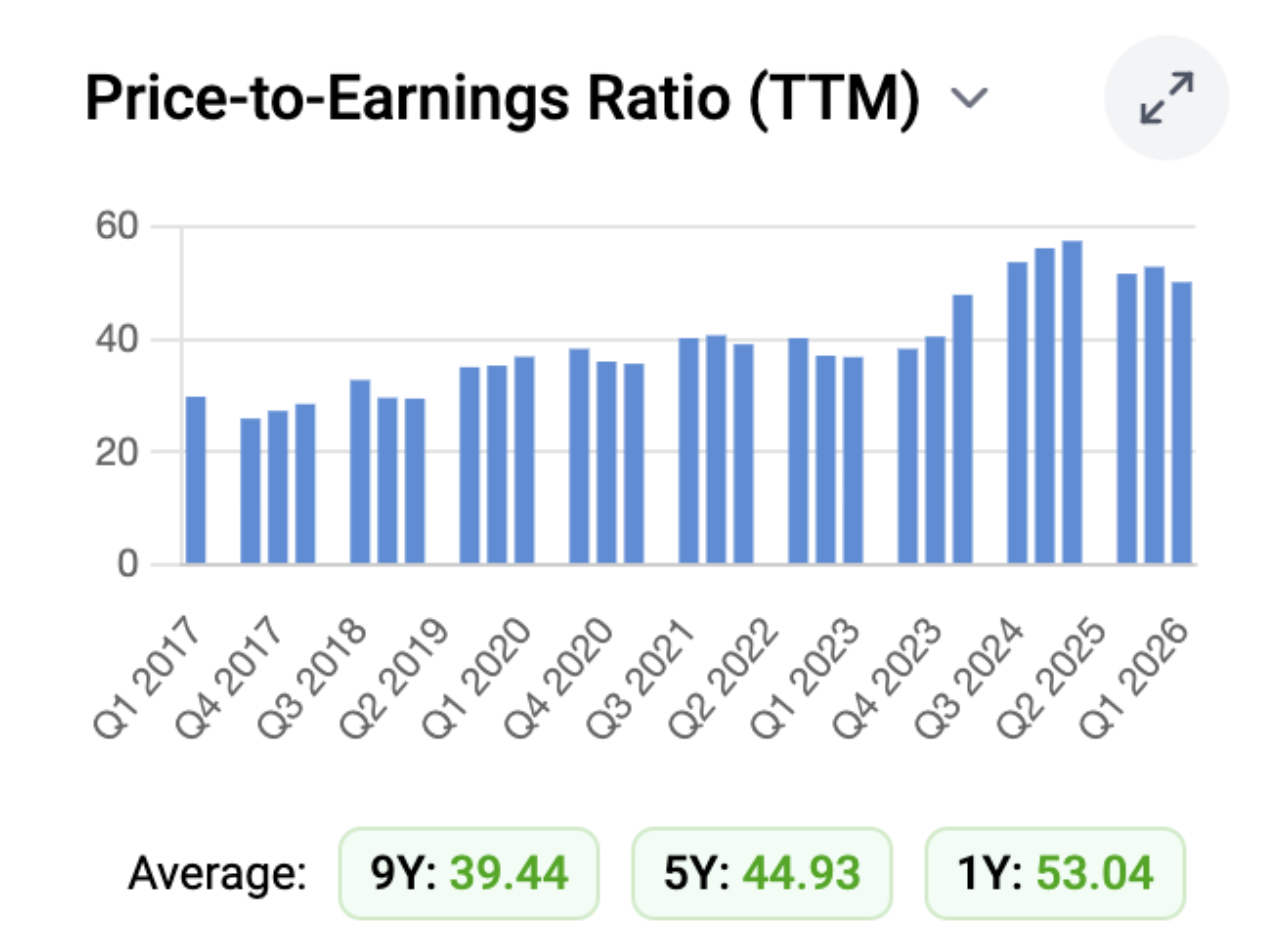
I would own a lot of Costco stock for the right price, but with a trailing 12-month PE ratio of around 47, I want to take a quick look to see if there was an entry point or at which price I would want to study more.
It's all about memberships
Costco doesn't make its money selling us products and goods at the store. It makes its money selling us the memberships.
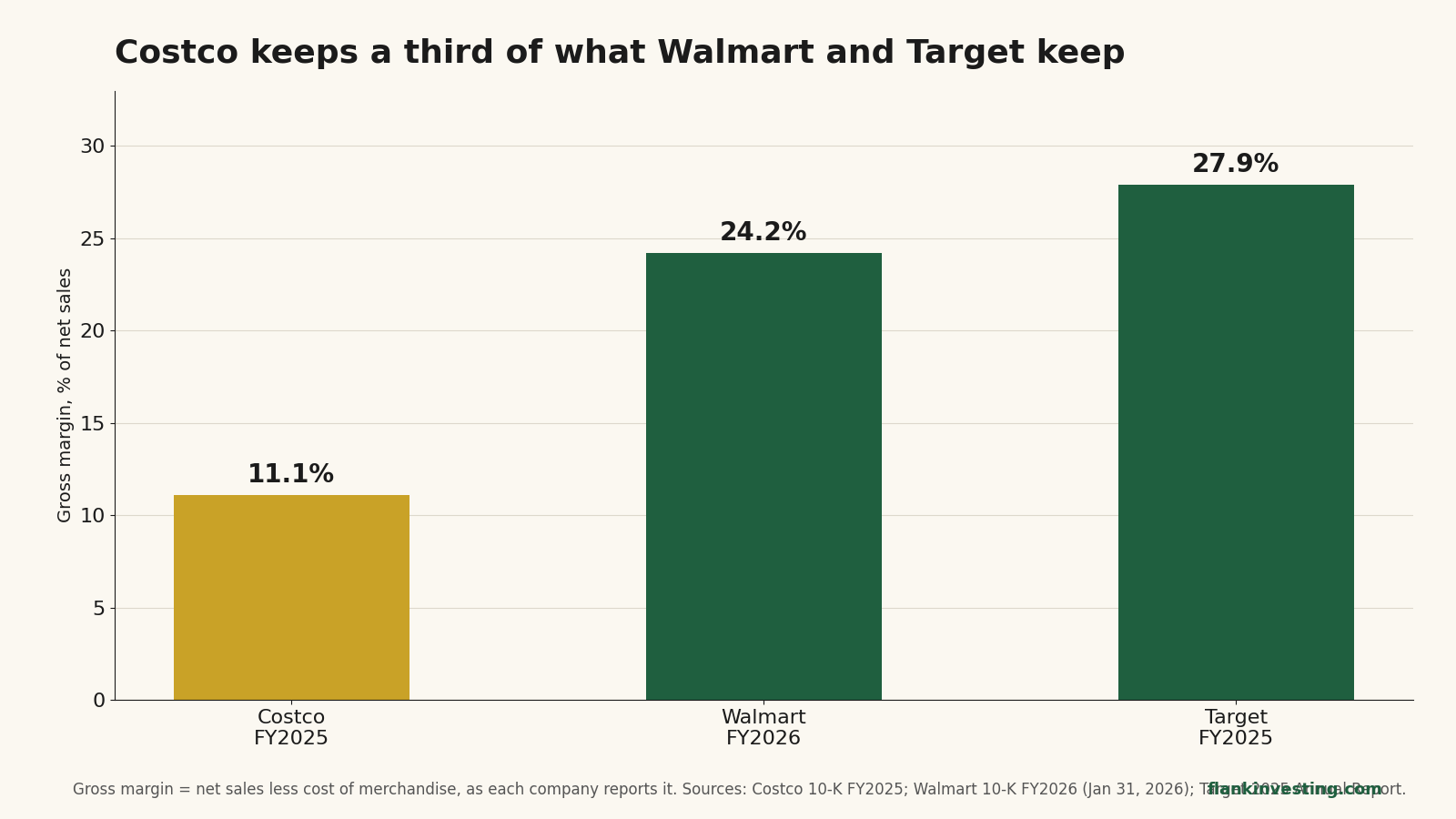
Last fiscal year, the twelve months ending August 31, 2025, Costco sold $269.9 billion of stuff. Its gross margin on all of that, what's left after paying for the merchandise, was 11.1%. As you could probably guess if you've ever been to a Costco, that is on purpose. They compete on price by selling in volume and through the memberships. Walmart keeps 24.2% of every sale. Target keeps 27.9%. Costco keeps 11.
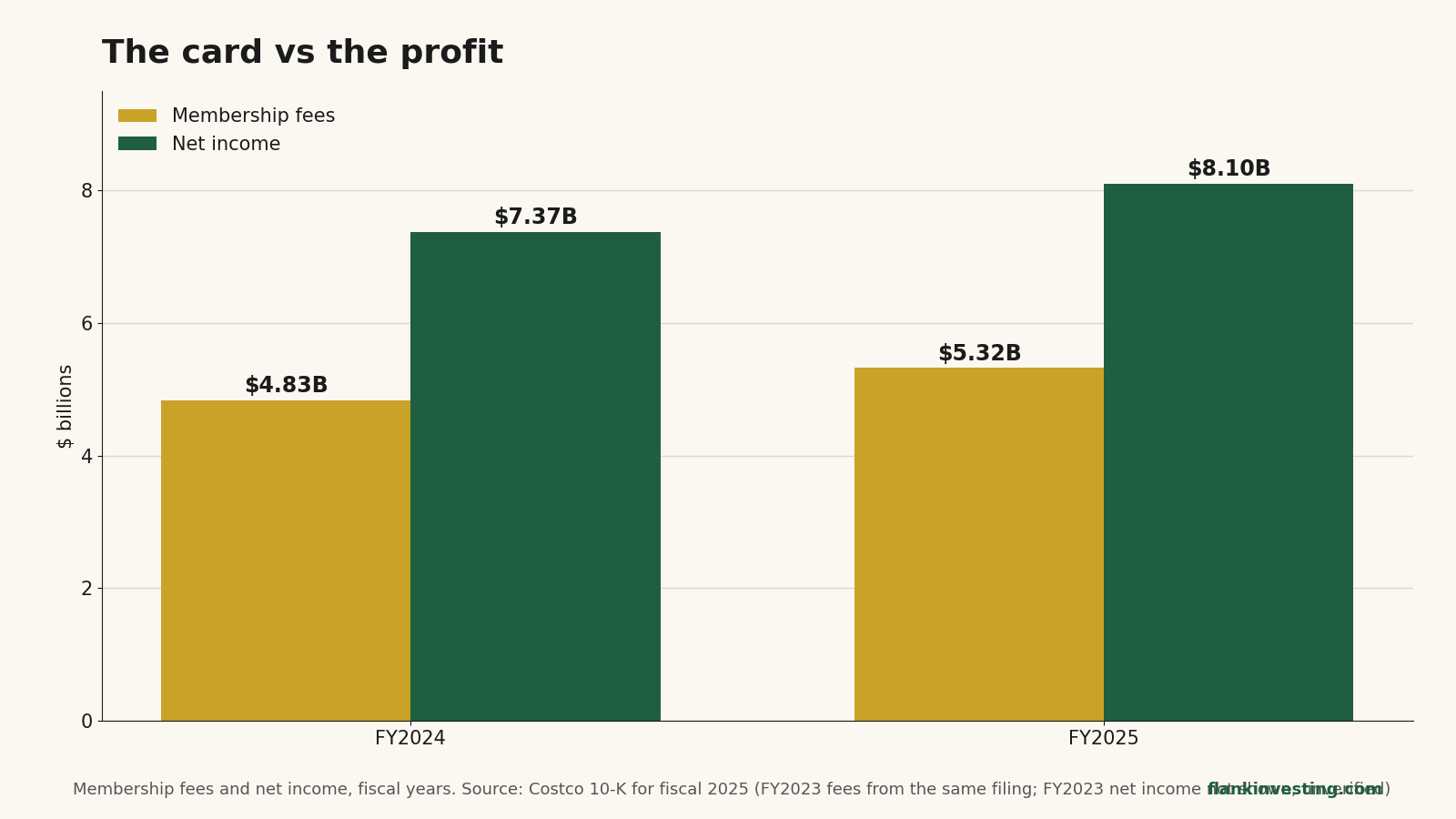
Meanwhile 81 million paid members handed over $65 a year, or $130 for the Executive card. Those fees added up to $5.3 billion.
Net income for the entire company was $8.1 billion.
So memberships are 65% of profits. That's why the key to watch for Costco is how many new memberships they are selling and renewing.
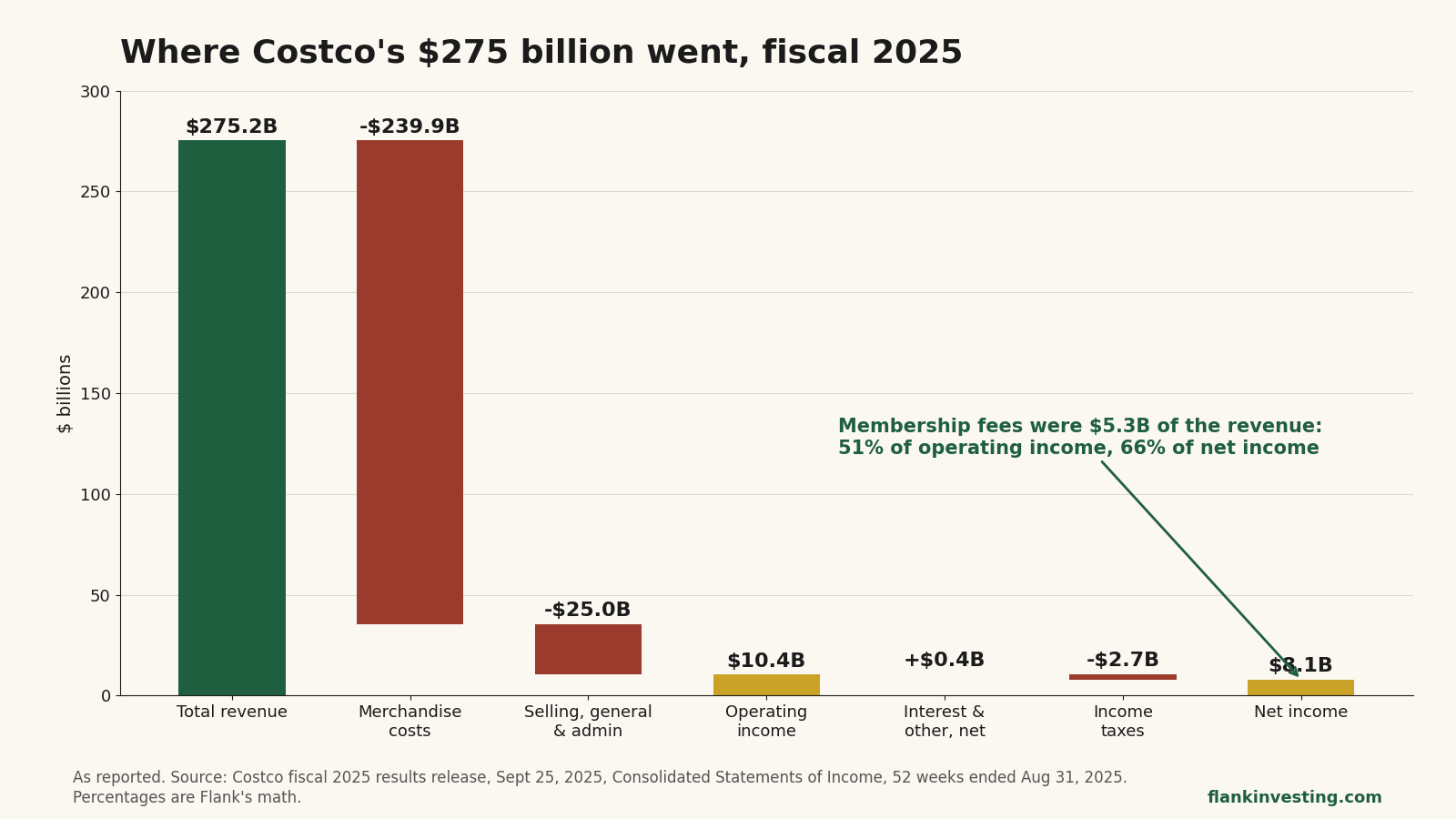
Here is how the whole $275 billion of revenue flowed down to that, straight from the income statement: merchandise cost $239.9 billion, running the stores cost $25 billion, leaving $10.4 billion of operating income, and after taxes $8.1 billion. The membership fees alone were half the operating income and two thirds of the net income, and they cost Costco almost nothing to collect. The store is the entire value they give you. The margin is the card.
One more number tells you the whole business. Executive members are 48% of the members and 73.6% of the sales. The people who pay twice as much for the card do three quarters of the shopping. What do they get for the extra $65? A 2% reward on everything they buy, capped at $1,250 a year, so anyone spending more than $3,250 a year is ahead.
Since June 2025 they also get the warehouse to themselves from 9 to 10 in the morning and a $10 monthly credit on same-day delivery. Costco found the customers who already loved it and gave them a reason to buy more.
How it grows
Sales went from $237.7 billion to $249.6 billion to $269.9 billion over the last three fiscal years. Net income went from $7.4 billion to $8.1 billion last year, $18.21 a share. Same-store sales were up 6%, and 5 points of that was people simply showing up more often, not spending more per trip.
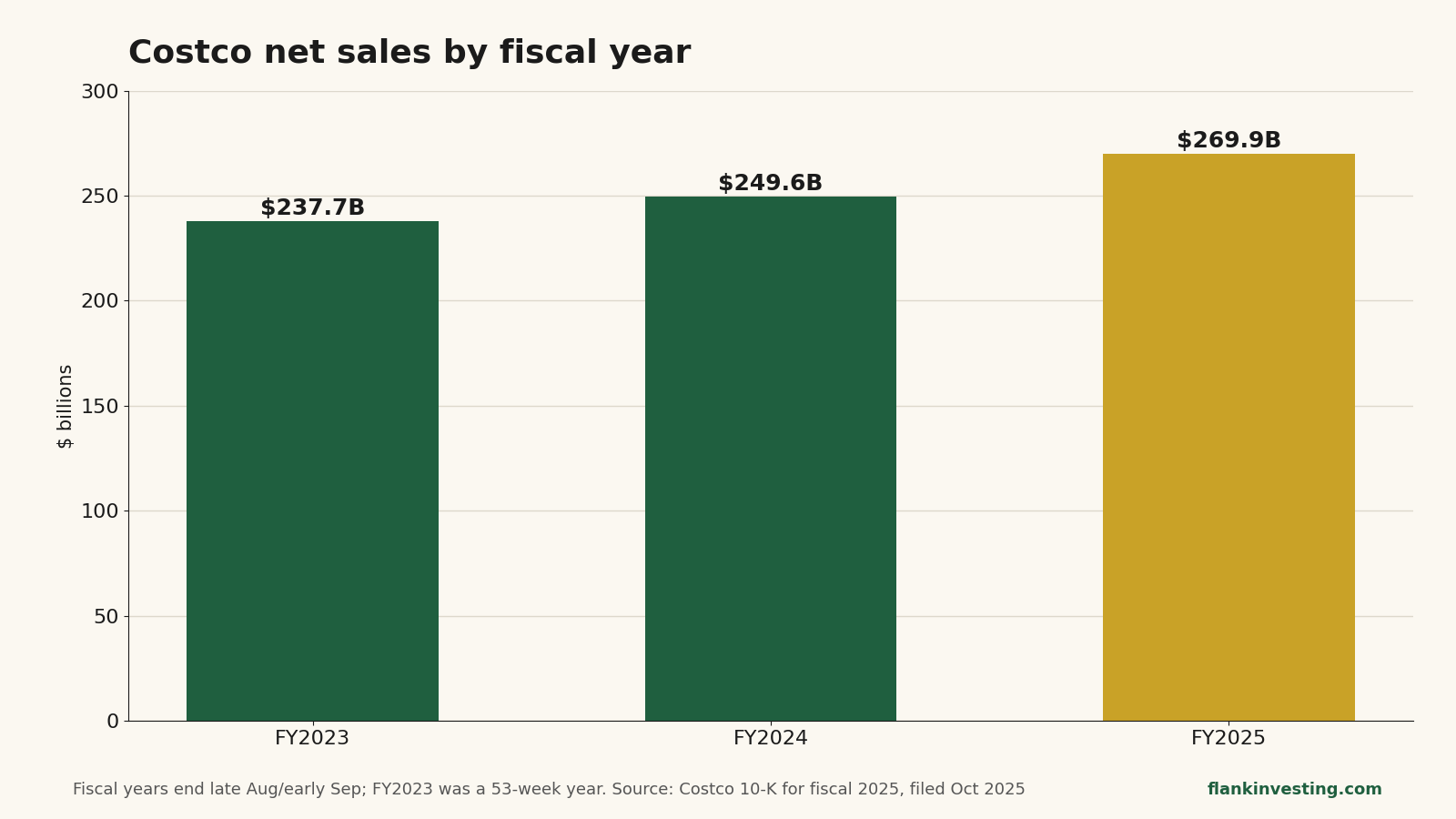
The fee line grows faster than the store does and drops almost straight to profit, which is why earnings grow faster than sales. About 40% of last year's fee growth came from the price increase in September 2024, the first since 2017. Costco raises the card roughly once every seven years and nobody leaves.
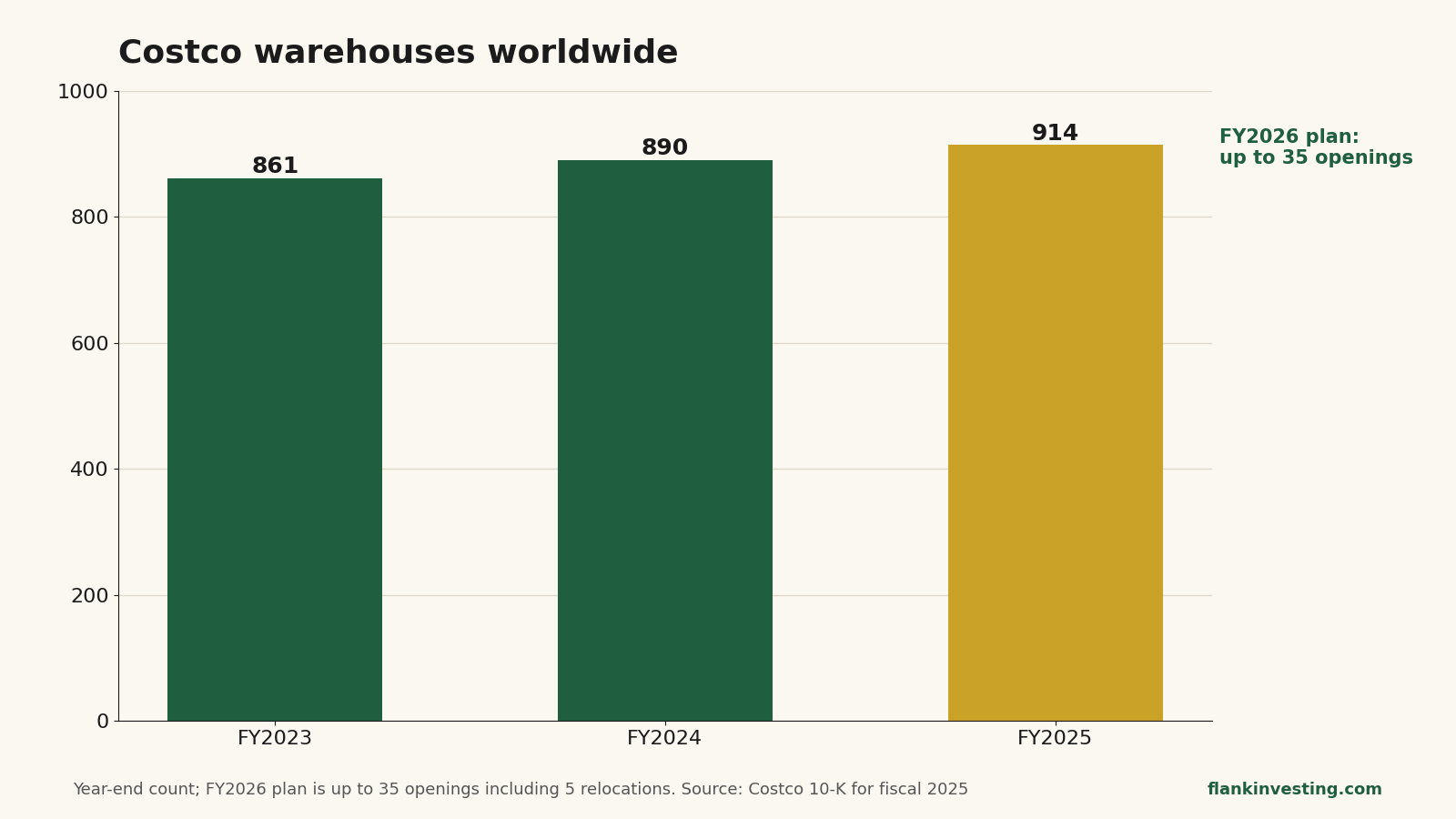
The physical business keeps growing too. 914 warehouses at year end, 24 more than the year before, and Costco plans to open up to 35 in fiscal 2026 on $6 to $6.5 billion of building. Average sales per warehouse were $272 million last year. Nine years ago that number was $159 million. Same box, 71% more sales.
E-commerce is about 7% of sales, growing 16% for the second year running after shrinking in 2023. It carries a lower margin than the warehouses, and in its own annual report Costco admits competitors have been faster to adopt AI. A company saying that in its own filing gets my respect.
The number I watch
92.3% of U.S. and Canadian members renewed last year. 89.8% worldwide. Both slipped a little, and Costco tells you exactly why: more people now sign up online through promotions, and those members renew at a lower rate. That renewal rate is the closest thing this company has to a health check. When it moves, everything else follows.
So what's the right price?
At about $895 a share, Costco trades at roughly 45 times the last twelve months of earnings, $19.88 a share. You pay $45 today for every $1 the company earned. Over the last ten years that number averaged around 39. From 2002 to 2019 it lived between 20 and 30. Walmart is about 42 right now. Target is about 16.
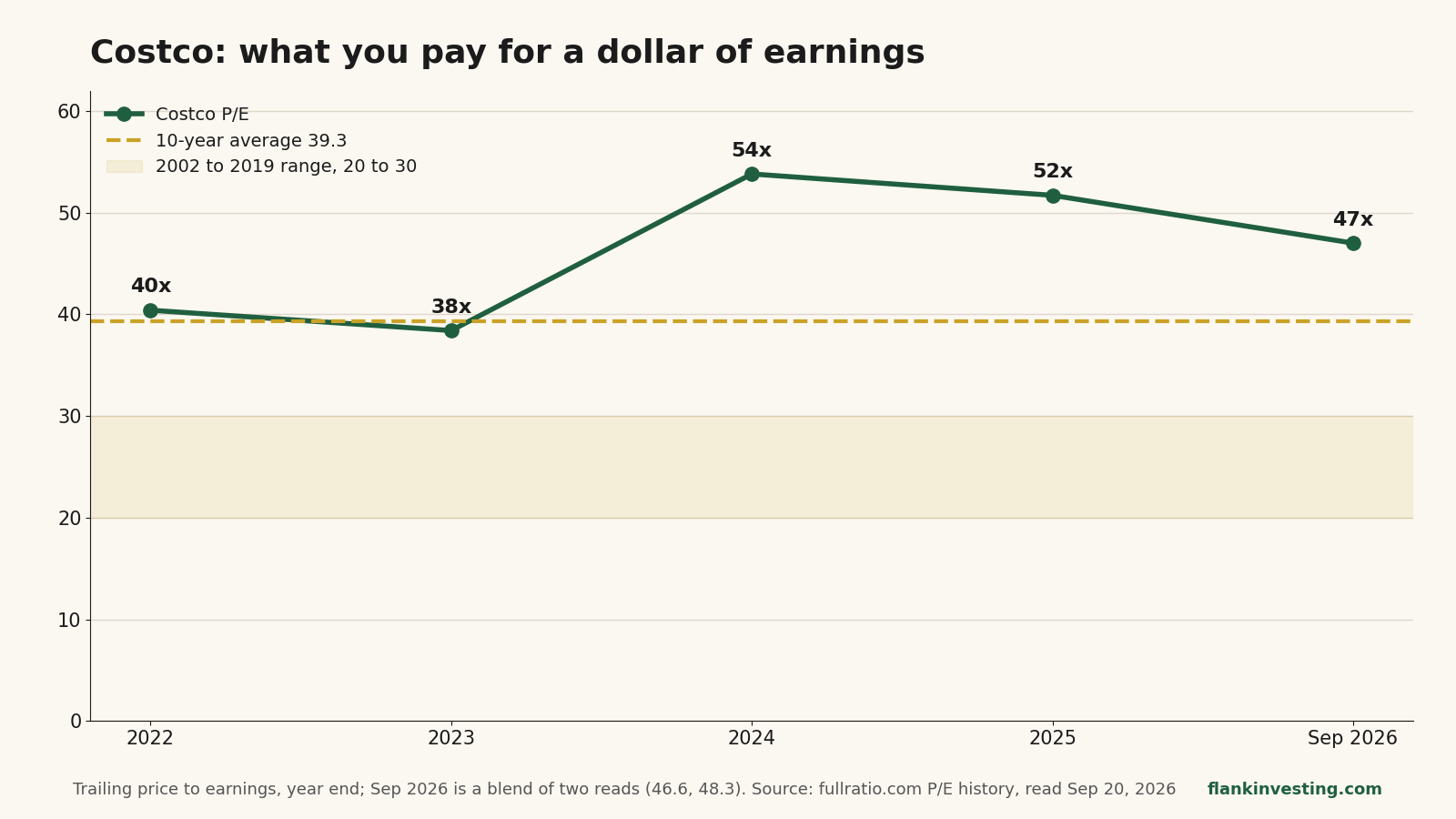
There's a quick way to ask whether a high multiple is earned, and it comes from Peter Lynch. Take the P/E and divide it by the percentage the company grows earnings each year. Lynch called 1 fair and 2 expensive. Costco grew earnings 10% last year, so 45 divided by 10 is about 4.5. Analysts put the five-year version above 4 in August. By the yardstick of the guy who wrote the book, this is very expensive.
I should make a post on PEG. It's a cool metric.
Here's my simple math, and it's mine, not Costco's. On $19.88 of earnings, the ten-year average multiple of 39 puts the stock near $775. The top of the old 20 to 30 range puts it around $600. So $775 is where I'd start studying seriously, and anywhere under it I'd study fast. Today's price needs another decade of things going right to make sense, and Costco itself says so. Right there in the risk factors: the stock price "reflects high market expectations," and any miss on sales, memberships, renewals or openings could send it down. They know.
Thursday
Costco reports fiscal fourth-quarter results after the close on Thursday, September 24. Wall Street wants $6.53 a share on $94.9 billion of revenue. One analyst has already warned that if you strip out a benefit from tariff refunds, the core number could miss. I'll read two lines first: membership fee income, and the renewal rate.
Sentiment: Bullish, but unsure about valuation multiple (know, I'm putting the cart before the horse, but I've studied Costco for a while )