

PLNT
Planet Fitness Inc
How Meta Smashed Planet Fitness
I wrote this morning about Meta's Muse and how it could be big for Meta. What I didn't think about was how bad it would be for other companies.
On Tuesday, a whole list of stocks fell with Planet Fitness over Meta Muse. But the key thing to understand is why they got crushed. The reason is an idea called consumer inertia.
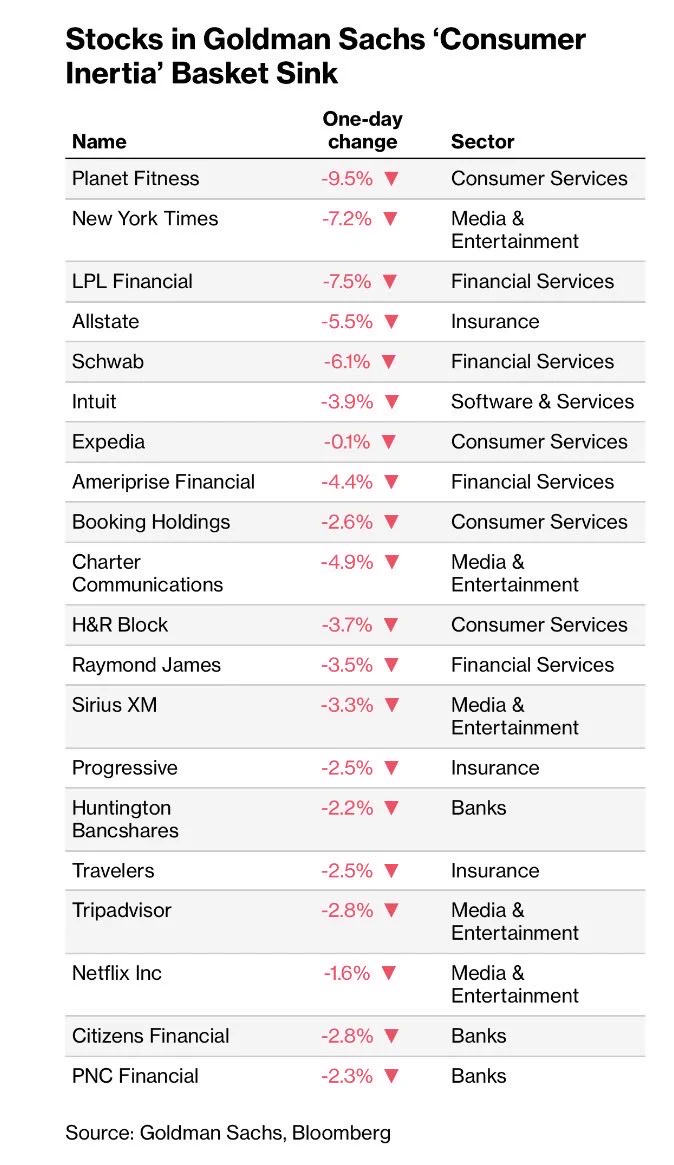
All the stocks impacted by the Consumer Inertia trend
Consumer inertia is the money a company makes because you don't bother to cancel, switch, or shop around. It's almost like a toll moat.
In the AI agentic era, you tell your agent, "Hey, evaluate my finances," and it comes back with, "You've been paying for two Planet Fitness memberships, one annual and one monthly." Or, "You have two Paramount Plus subscriptions." (paramount wasn't on that list, but it should be - i myself am a victim of multiple paramount+ subscriptions that I flagged from good bills hygiene.
I do want to say though: I think this is great for the consumer and one of the positive AI stories.
It also shows how quickly software is changing.
What happened Tuesday
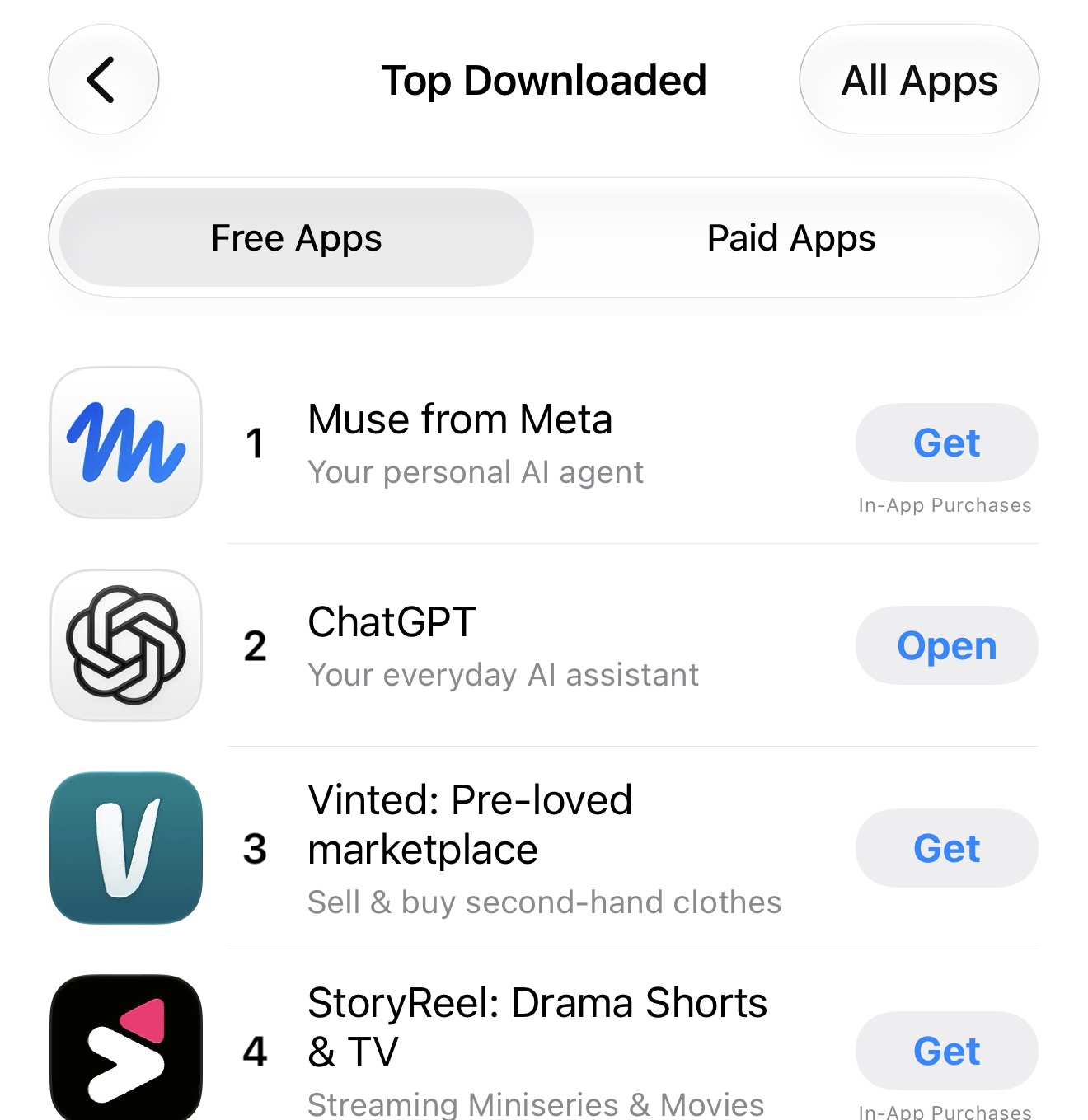
Muse hit No. 1 on Apple's US App Store. It does things for you by connecting to services like Gmail and OpenTable. Meta's stock jumped 11% on Monday.
Then on Tuesday, the S&P 500 Financials index (the banks, brokers and insurers in the S&P 500) dropped as much as 2.4%, to its lowest level since July. The rest of the market was roughly flat.
Those biggest hit in this first wave:
JPMorgan, Morgan Stanley and Wells Fargo: down more than 2.5%
Allstate and Charles Schwab: down more than 5%
Booking: down 3.9%. Expedia: down 3.7%
Planet Fitness: down as much as 11%
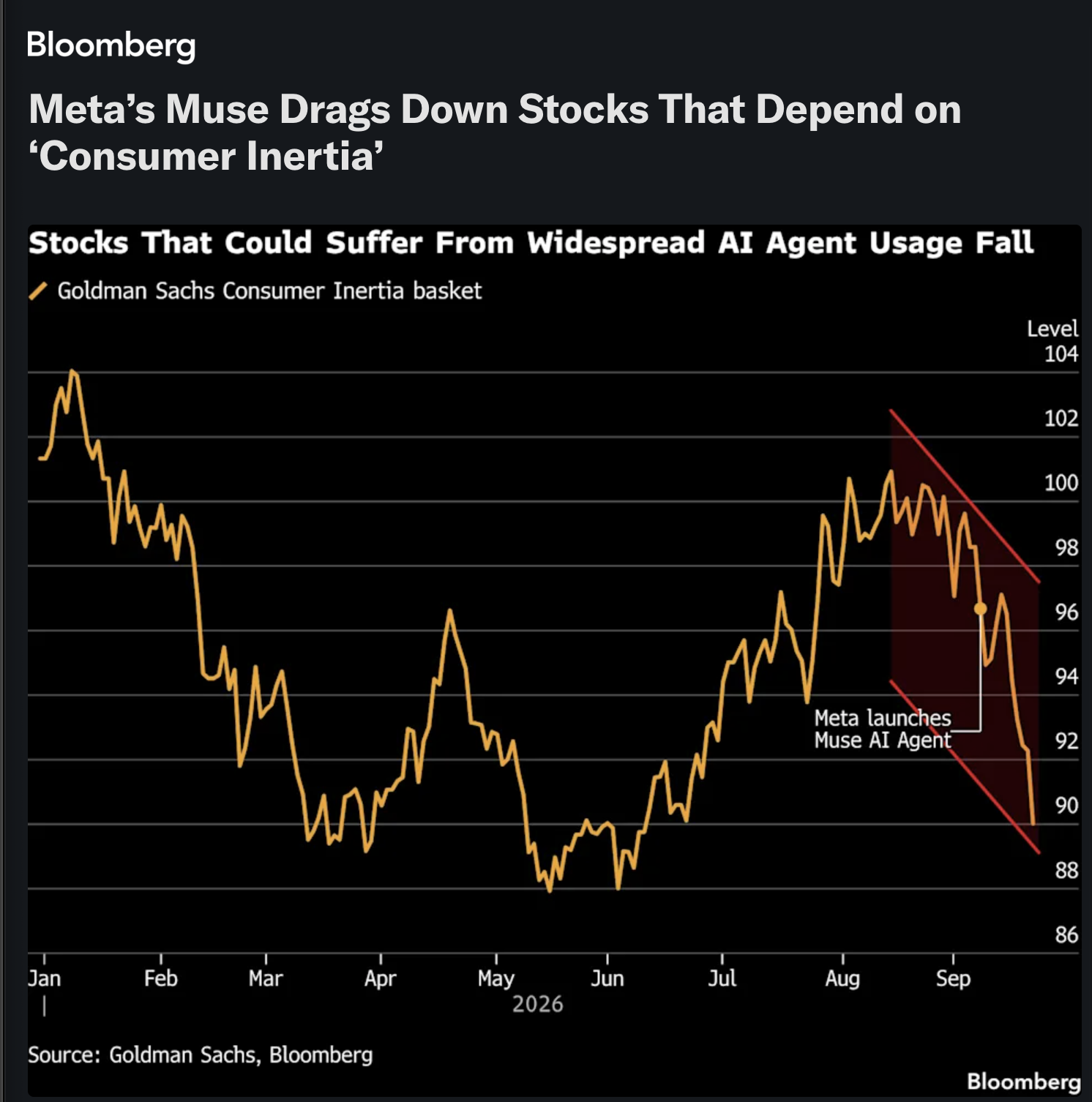
Goldman Sachs's trading desk put out a note. As AI assistants like Muse get better at comparing prices, booking trips and dealing with customer service, industries that rely on recurring bills, negotiable pricing and add-ons could come under pressure.
Goldman even has a basket (a group of stocks it tracks together) of "consumer inertia" stocks in that basket:
Phone carriers: AT&T, T-Mobile
Insurers: Allstate, Progressive
Streaming: Netflix, Paramount Skydance
Travel booking: Expedia, Booking
Muse is "no doubt a negative for those kinds of companies," said Rhys Williams, chief strategist at Wayve Capital Management. "Right now it's more of a curiosity, but I think two years from now we're all going to have agents."
And Muse isn't alone. A private startup called Instinct does the same thing, and as of last week both can make phone calls for you.
The toll you're paying from consumer inertia
In the UK they actually measured it. Citizens Advice found British consumers lose £4.1 billion a year to the "loyalty penalty," the extra you pay for sticking with the same company, across mobile, broadband, home insurance, mortgages and savings. That's £877 a year on average, and 8 in 10 people were paying it in at least one of those. Britain's competition regulator looked into it and landed on about £4 billion too.
That's the toll Muse is coming for (at least the first one for now...)
The other side
To be fair, few on that list has lost a meaningful amount oifcustomer to Muse yet. Amazon already blocked Muse from its store.
Art Hogan at B. Riley Wealth told Reuters: "If you're going to trust the management of your finances to something that Muse found for you, then you were likely not a big payer to anyone in that industry to begin with."
Yeah bro but we're talking B2C here...?
What I'm Thinking / Doing
Here's how I think about it. I don't plan on using Muse as a consumer. I don't trust Meta with THAT much data, and I've thought about it since I posted that post.
Apple already put out its new Siri AI in beta on Sep 14. It kinda sucks today though. When it gets its Muse super powers, which I would call inevitable, look out! (I know, I know, there's an assumption there)
But when Apple inevitably gets it right that's going to be an incredible game changer, so it might be time to look at what old Apple is trading at. (Apple closed at a record high Monday... so maybe it's just time to be patient.
What I want to research further is Cloudflare. The internet used to run on a deal: websites let Google read their pages for free, and Google sent readers back. AI bots broke that deal. In July 2025, Anthropic's bot read about 38,000 pages for every visitor it sent back to a site. OpenAI's read 1,091. The websites pay the server bill and lose the readers.
So Cloudflare built a toll booth. In July 2025 it let websites charge AI bots for every page they read. In July 2026 it added "Pay Per Use": publishers get paid when their content shows up in an AI answer.
Akamai and TollBit are doing it too. Cloudflare's revenue was $696.1 million in the quarter that ended June 30, up 36%, but it still lost $170 million under GAAP, the standard accounting rules. It calls itself "payment rails for the Agentic Internet." Cloudflare's Q2 results
Sentiment: Too hard, but made me curious about Cloudflare